Silver Ameraucana
A Line Worth Preserving
My large fowl Silver Ameraucana program was built directly from Steve Neumann’s flock. Steve worked with large fowl Silver Ameraucana for twelve years, and for roughly the last seven years his flock was maintained as a closed line.
My first birds from that line actually came to me before I ever purchased directly from Steve. I started with three Silver Ameraucana hens that I bought from a friend who had previously purchased hatching eggs from him. Those three hens were my first introduction to the Neumann line and marked the beginning of what would later develop into my larger Silver Ameraucana breeding program.
In July 2025, I brought home my first small flock directly from Steve. These were retired breeders from his program, birds that had already been used in the breeding work he had spent years developing. At that point, I was still very much at the beginning of building my own program.
Among the retired breeders I brought home from Steve was my cock, Orion. When Orion later passed in his sleep, I reached back out to Steve because I wanted to source additional males and preserve more of the genetic diversity represented within his line. I expected that conversation to be about adding a few more birds.
Instead, Steve offered me the opportunity to take on the remainder of his flock.
In June 2026, Steve bequeathed that flock to me, giving me the responsibility of continuing the work he had already spent more than a decade developing.
I was floored by the offer. At the time, I was still a relatively new and unknown breeder, and suddenly I was being trusted with the last of an entire breeding line. My immediate reaction was essentially, why me?
Steve saw something in me that made him willing to place that responsibility in my hands, and I am incredibly grateful for that trust. I do not take it lightly. Being given the opportunity to continue a line that someone else spent twelve years developing feels like the opportunity of a lifetime, but it also comes with a tremendous amount of pressure.
Steve has been active within the Ameraucana community for years, including contributing to Ameraucana breed-history discussions and Silver breeding conversations. Other experienced Ameraucana breeders have publicly recognized the quality of his large fowl Silvers, which makes carrying that line forward especially meaningful to me.
This gave me considerably more than a group of breeding birds. It gave me a population carrying more than a decade of deliberate breeding history and placed the continuation of that work in my hands.
I do not view the Neumann birds simply as foundation stock that happened to come from a particular breeder. I view the line itself as something worth maintaining.
That history is why provenance matters so much to me as this program develops. I want the Neumann line to remain identifiable for what it is, and I want the decisions I make from this point forward to be documented clearly enough that the history of the flock is not lost as new generations are produced.
As additional Silver Ameraucana genetics are incorporated into the broader JK Homegrown program in the future, their origins and purpose will be documented separately. The Neumann flock will remain the foundation of the program and the reference point from which the rest of my Silver Ameraucana work develops.
Additional Lines
In early May 2026, I sourced a dozen Silver Ameraucana hatching eggs from my friend Nolie at Mojo Homestead in Florida. Nolie originally sourced her Silver Ameraucana from Jessica at GypsyHen, giving these birds a documented provenance that I can continue tracking as they move into my program.
I chose this source for several reasons. The genetics were reasonably accessible to me, but more importantly, I already had a good understanding of the line before bringing it in. I knew what faults were present, what Nolie had been actively working to improve, and what I could reasonably expect to evaluate as the birds matured. That transparency made the line much more useful to me than bringing in outside genetics blindly.
I currently have a handful of grow-outs from that hatch in the Ameraucana grow-out pen. At this stage, I am especially pleased with the brightness of the silver developing in the cockerels. The pullets are lighter than I would ideally like to see right now, but they are still immature, and different lines can develop somewhat differently. I do not consider their current appearance a final evaluation.
All grow-outs are still being evaluated as they mature. Their eventual place in the breeding program will depend on how they develop, how closely they meet the Standard, and whether they offer something useful to the broader Silver Ameraucana program.
As I add additional lines, this will continue to be updated.
Last updated: October 04, 2026
How I Am Moving the Line Forward
My goal is to preserve the original Neumann line as a distinct breeding population while continuing to improve it through careful selection. The primary Neumann line will remain closed, allowing me to continue working within the genetic population Steve developed rather than immediately blending it into other Silver Ameraucana lines.
Beginning with the spring 2027 breeding season, mature birds will be divided into a number of smaller breeding groups, primarily pairs and trios. These groups will allow me to use compensation mating, pairing birds whose strengths and weaknesses complement one another, while also giving me greater control over individual families and the ability to track what specific combinations produce. As the program develops, I intend to use these groups to establish a spiral mating system that will allow me to manage related families across generations while continuing to make purposeful selection decisions within the closed population.
A separate breeding group will be maintained for line-cross work. Outside genetics will only be introduced when there is a specific breeding objective and a clear reason for making the cross. These offspring will remain identifiable and separate from the closed Neumann population so that their ancestry and contribution can be evaluated without obscuring the provenance of the original line.
Every fall, I also plan to conduct what Steve calls a “Vigor Hatch.” Rather than using controlled pairs and trios, the mature breeders will be placed together in a large flock-breeding pen and allowed to make their own mate selections. Chicks produced through the Vigor Hatch will receive their own identifiable wing bands and will be evaluated alongside the offspring from the controlled breeding groups. Those that earn a place in the program can then be incorporated into future breeding generations. If egg production during the Vigor Hatch is sufficient to meet my own hatching needs first, additional hatching eggs may also be made available.
Every chick produced for the program will be wing banded, and detailed records will be maintained for ancestry, breeding groups, pairings, fertility, hatch results, vigor, egg color, type, and the performance of offspring over time. The purpose of those records is to allow me to evaluate more than the individual bird standing in front of me. I want to know what families consistently contribute, which matings complement one another, where problems repeat, and which birds prove valuable through the quality of the offspring they produce.
Selection will be strict. The best offspring will be retained as potential future breeders, and the strongest examples of the Standard will be conditioned and shown. Birds with serious deficiencies or characteristics that make them unsuitable for the breed will be hard culled. Birds that are healthy and useful but do not offer enough to move the breeding program forward may be placed with homesteaders as non-breeding layers.
Hatching eggs offered from this program will come from the same breeding pens and the same pool of eggs I use for my own hatches. I do not maintain a separate standard for eggs sold to someone else. If an egg is not one I would be willing to set in my own incubator, it will not be sold as a hatching egg.
The objective is not simply to produce more Silver Ameraucana. It is to preserve the history already present in this flock while creating enough documentation, structure, and selection pressure to understand what each generation contributes and make increasingly informed breeding decisions as the program develops.
Building for the Long Term
At this stage, I still consider these birds to be Neumann Silvers.
Through fall and winter 2026, I am working directly with the flock Steve developed and with breeding decisions that were already in motion before the birds came to JK Homegrown. When I look at them now, I still see Steve’s work first.
That begins to change in spring 2027, when I make the first full set of breeding decisions under my own program.
From then on, I will determine the pairings, make the retention decisions, evaluate the offspring, and decide which strengths I want to preserve and which faults I need to address. With every generation, those choices will begin shaping the population in ways that reflect my own priorities and judgment.
For that reason, I do not intend to continue calling future generations the Neumann line as though nothing has changed.
Steve’s flock will always be the foundation, and that provenance will always be documented. I am proud of where these birds came from, and I want that history to remain visible. But I also think it is important to be accurate about where Steve’s direct breeding decisions end and mine begin.
A line can start with the same genetics and still move in a different direction under a different breeder. That difference does not have to mean improvement or decline. It simply means that selection is now happening through another person’s hands.
I want to give Steve full credit for the foundation he entrusted to me without attaching his name to decisions he did not make. From spring 2027 forward, the responsibility for where these genetics go belongs to me.
Steve remains an important resource for me, and I still speak with him regularly. When I get stuck or need perspective, he is one of the first people I call. I value the experience behind the flock and want to continue learning from it while also taking responsibility for the decisions I make from this point forward.
A major part of that long-term plan is building what I think of as a genetic bank within the program. Rather than depending on being able to find suitable outside genetics only when I suddenly need an outcross, I want to gradually establish multiple documented genetic pockets within JK Homegrown.
My current goal is to add new Silver Ameraucana genetics as suitable opportunities arise, provided the foundation birds meet my minimum requirements for type and the Standard. These sources will not be added simply for the sake of collecting names or pedigrees. I want them to remain identifiable and useful as separate breeding resources so that, over time, I can maintain enough internal diversity to make deliberate outcrosses from within my own program.
That kind of structure depends heavily on documentation. Provenance, family relationships, pairings, offspring quality, fertility, vigor, type, and recurring strengths and weaknesses all become part of understanding what each genetic pocket contributes and how it can be used responsibly.
I am also approaching this program as an ongoing education, not as something I expect to master immediately. Much of the way I think about population management and long-term breeding strategy has been influenced by my work with Pomeranian geese and by conservation-breeding resources developed through organizations such as the Livestock Conservancy.
I continue to attend educational webinars, source new books and reference material, listen to experienced breeders discuss their methods, and seek out people who have more years behind them than I do. I want my breeding decisions to be informed by proven practices, observation, recordkeeping, and experience rather than assumption.
The long-term goal is bigger than producing the next generation of Silver Ameraucana. I want to build a stable, documented breeding program that can continue improving over decades.
These are birds I can realistically imagine still working with when I am old and gray. I hope to see more quality Silvers in the show hall, more breeders working seriously with the variety, and more birds being bred toward the Standard.
And if I am fortunate enough to work with them for that long, I hope that one day I will be in the position Steve was in when he trusted me with his flock: able to look at what I have built, choose someone I trust, and hand the work forward.
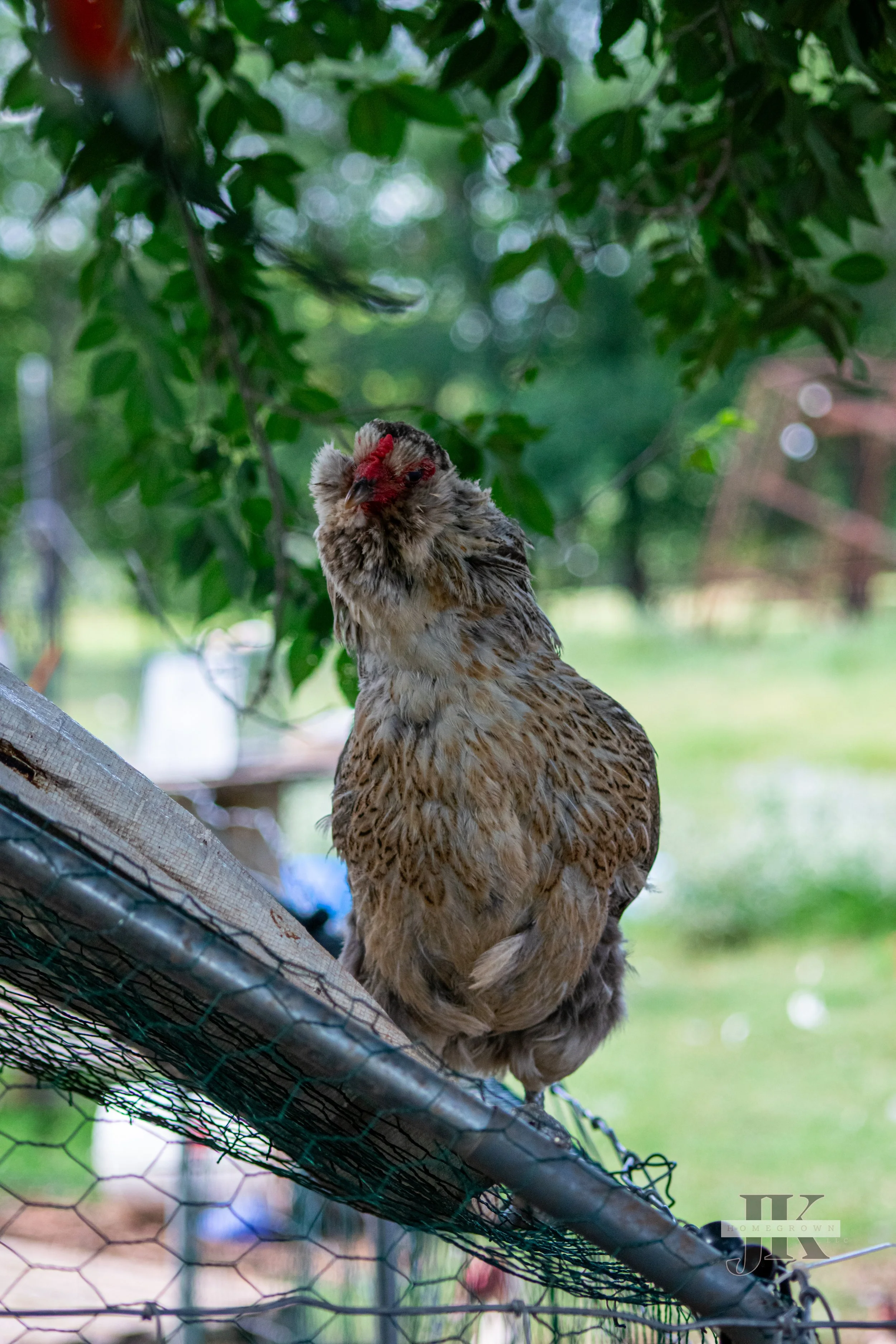
Silver Ameraucana hen
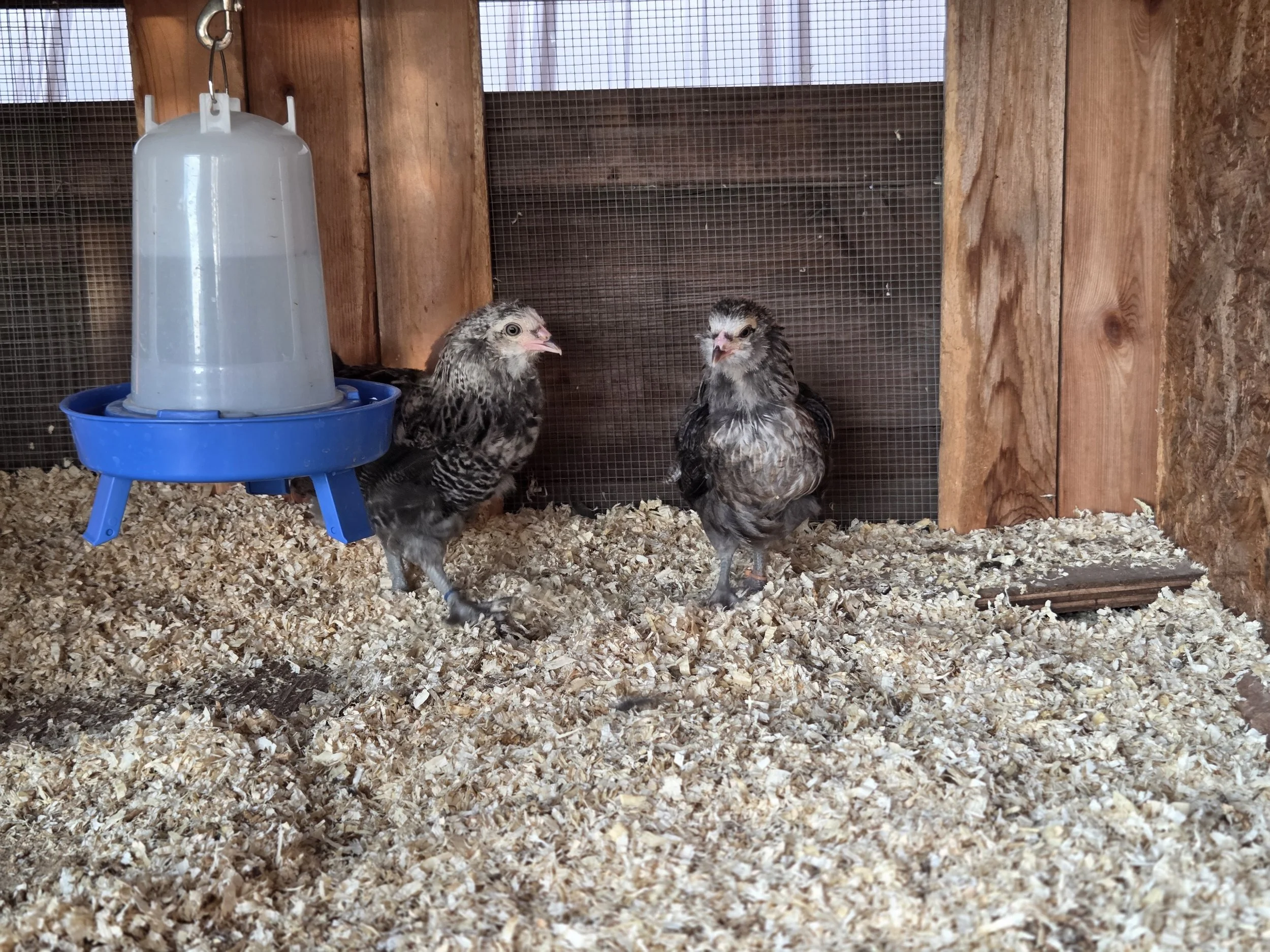
My first silver chicks 2025
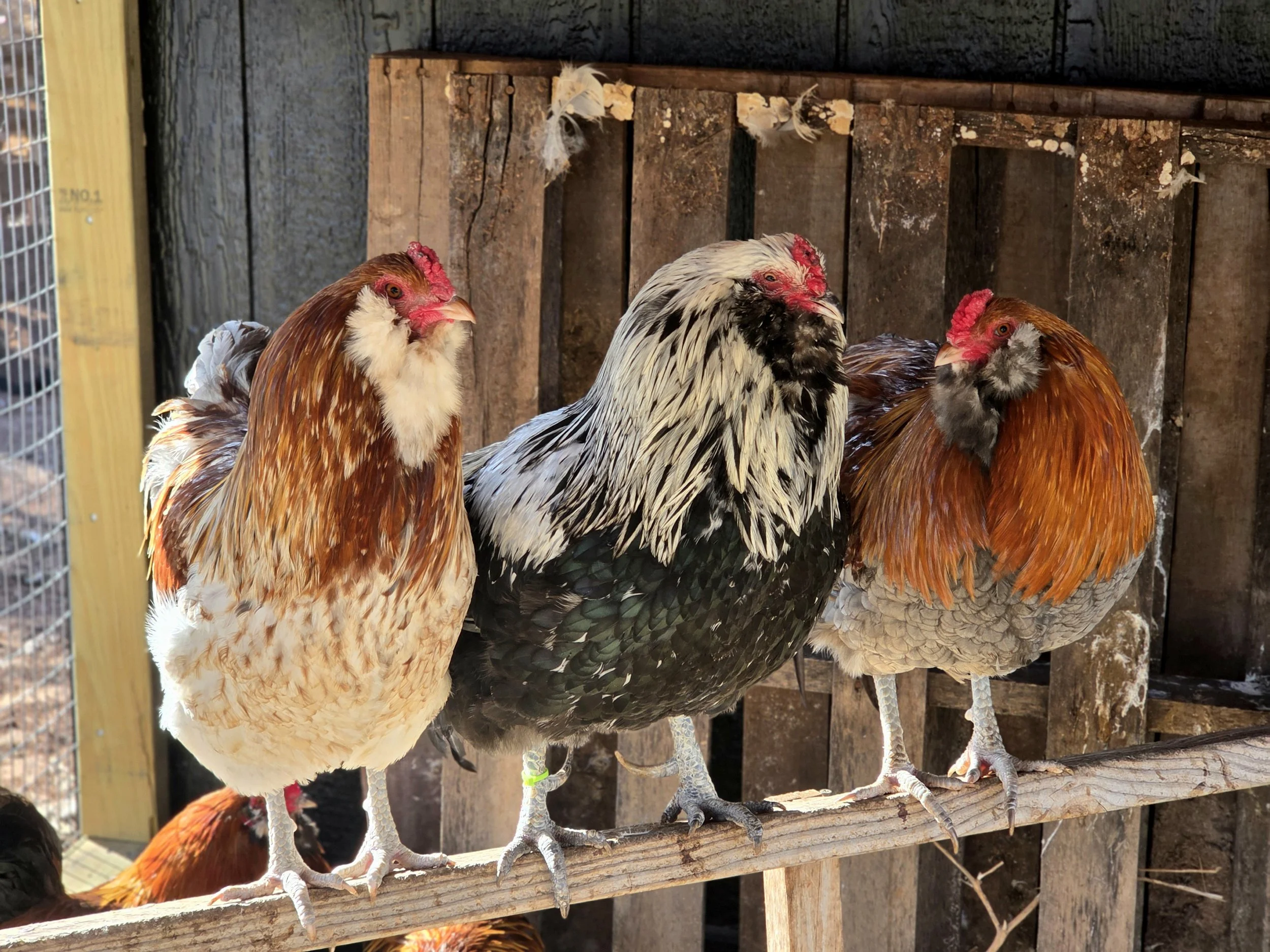
Orion center
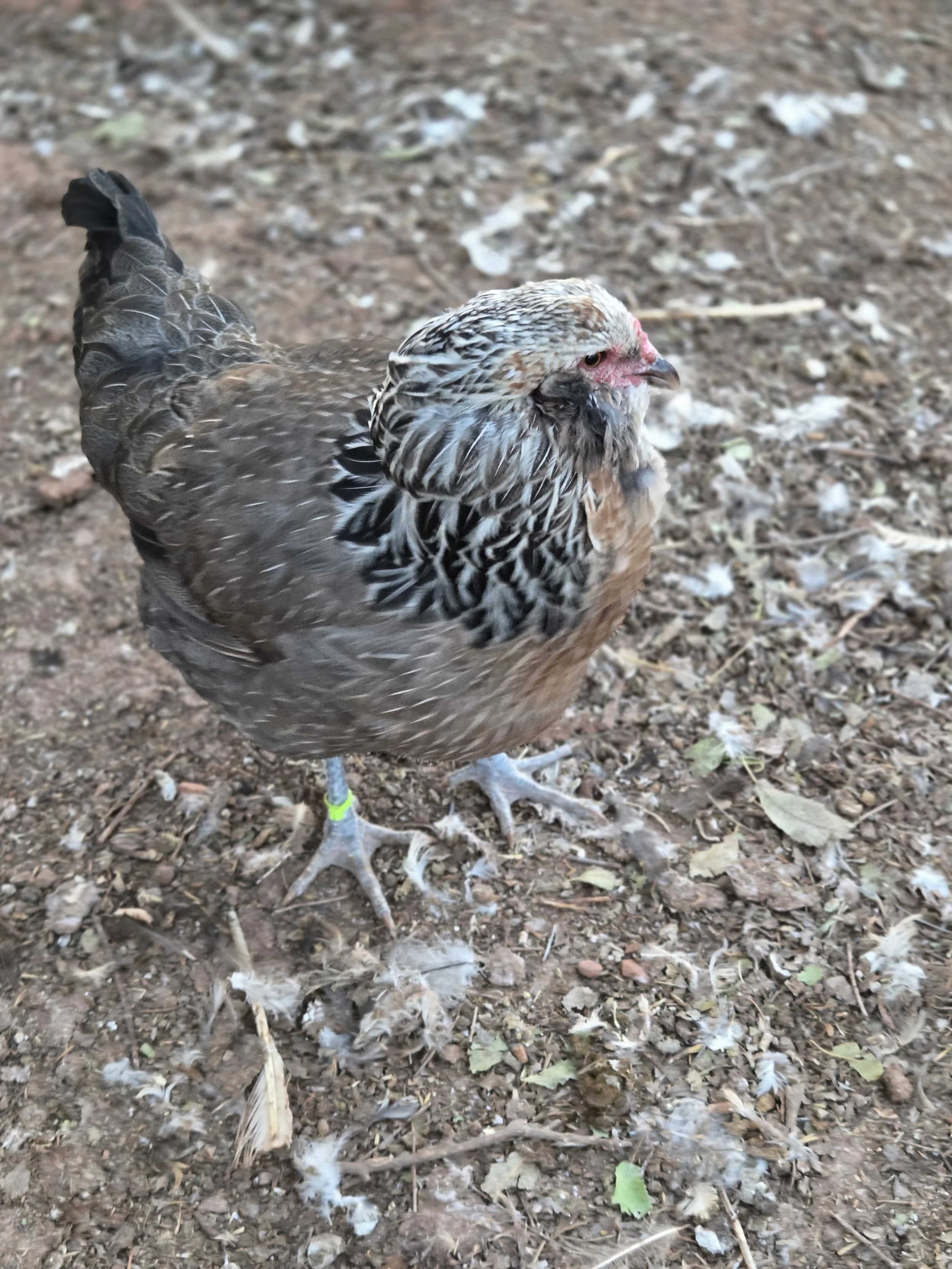
Silver hen 2025
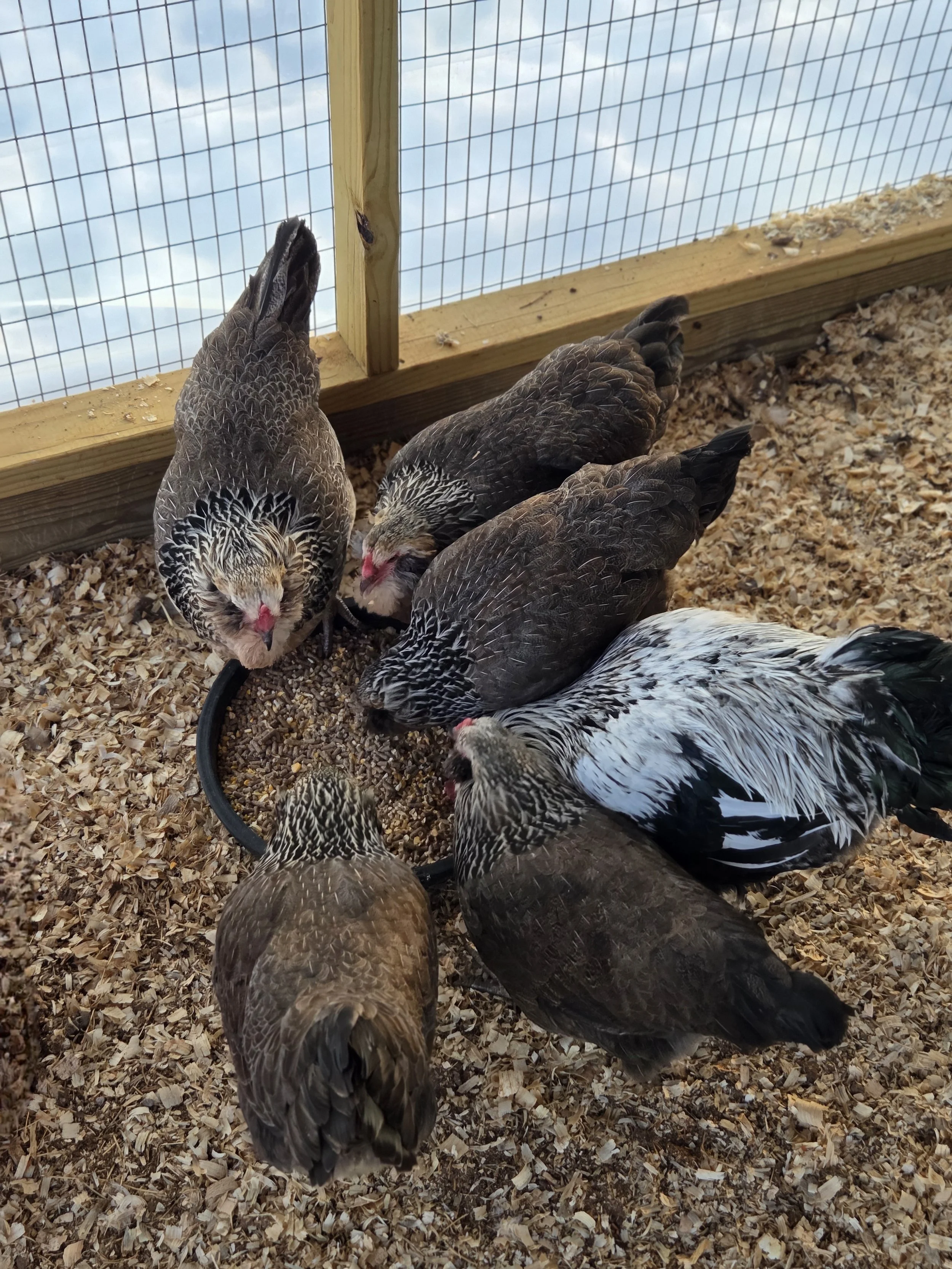
Orion's Flock 2025
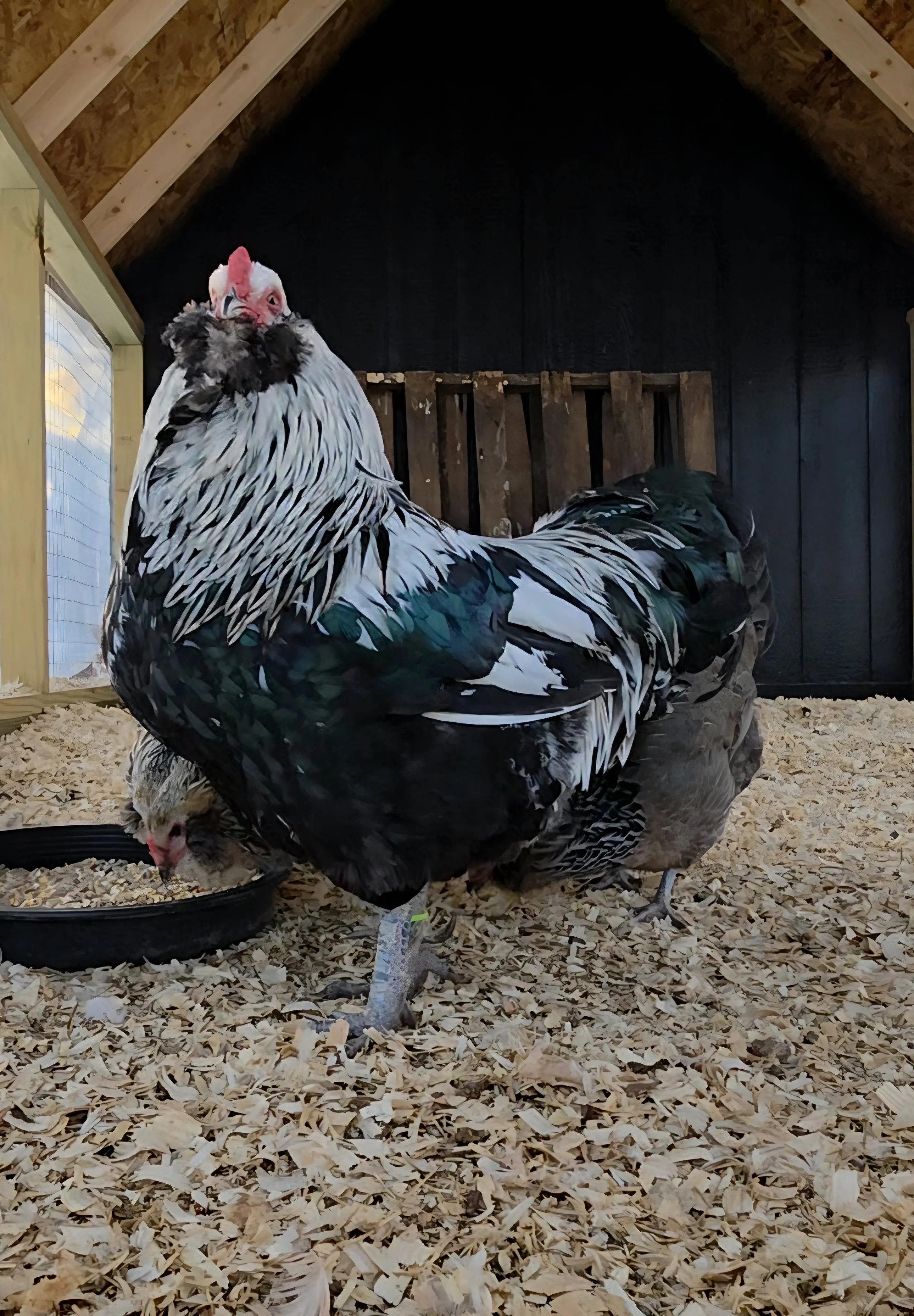
Orion 2025
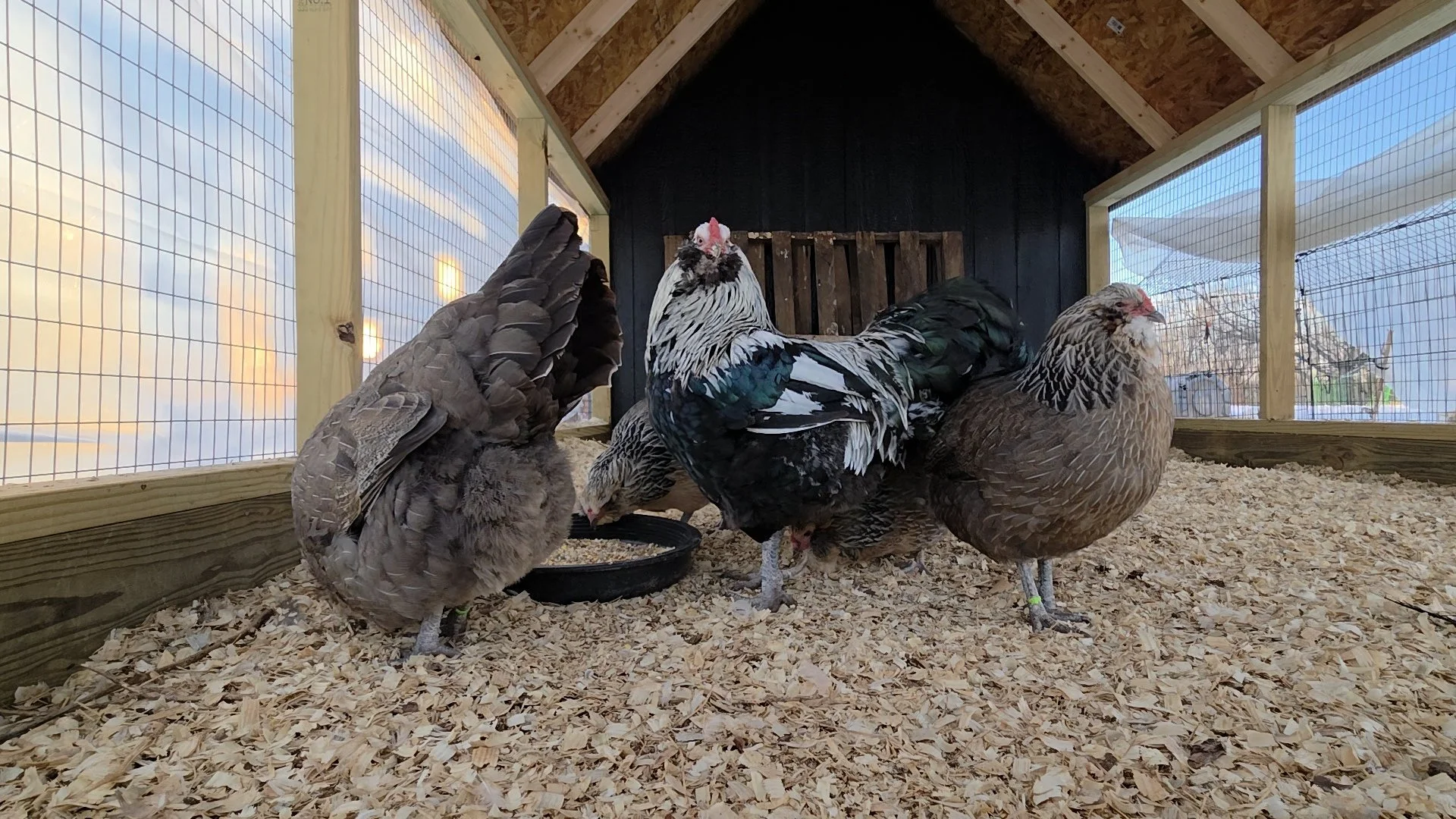
Orion and Flock 2025
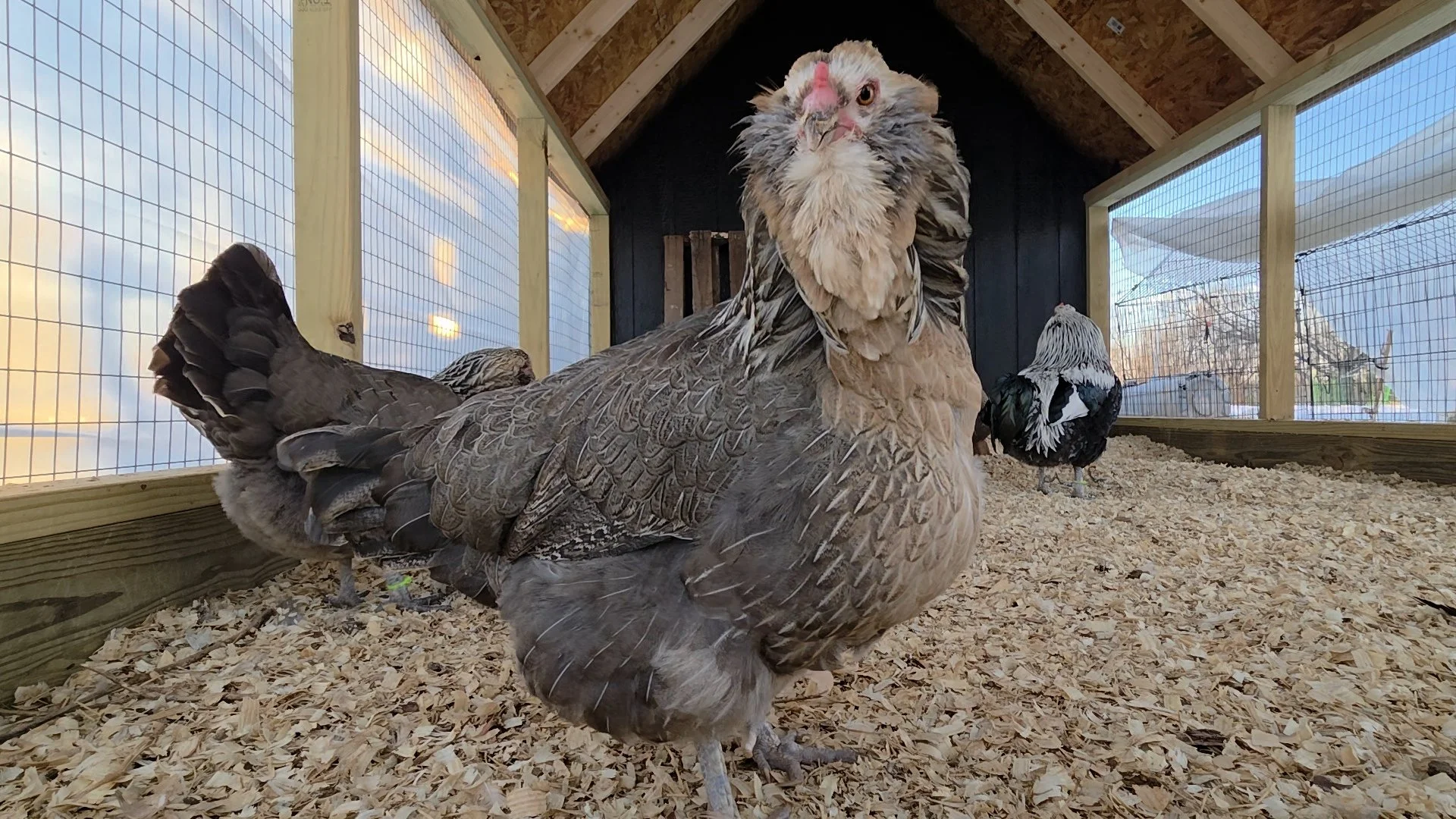
Silver Hen 2025
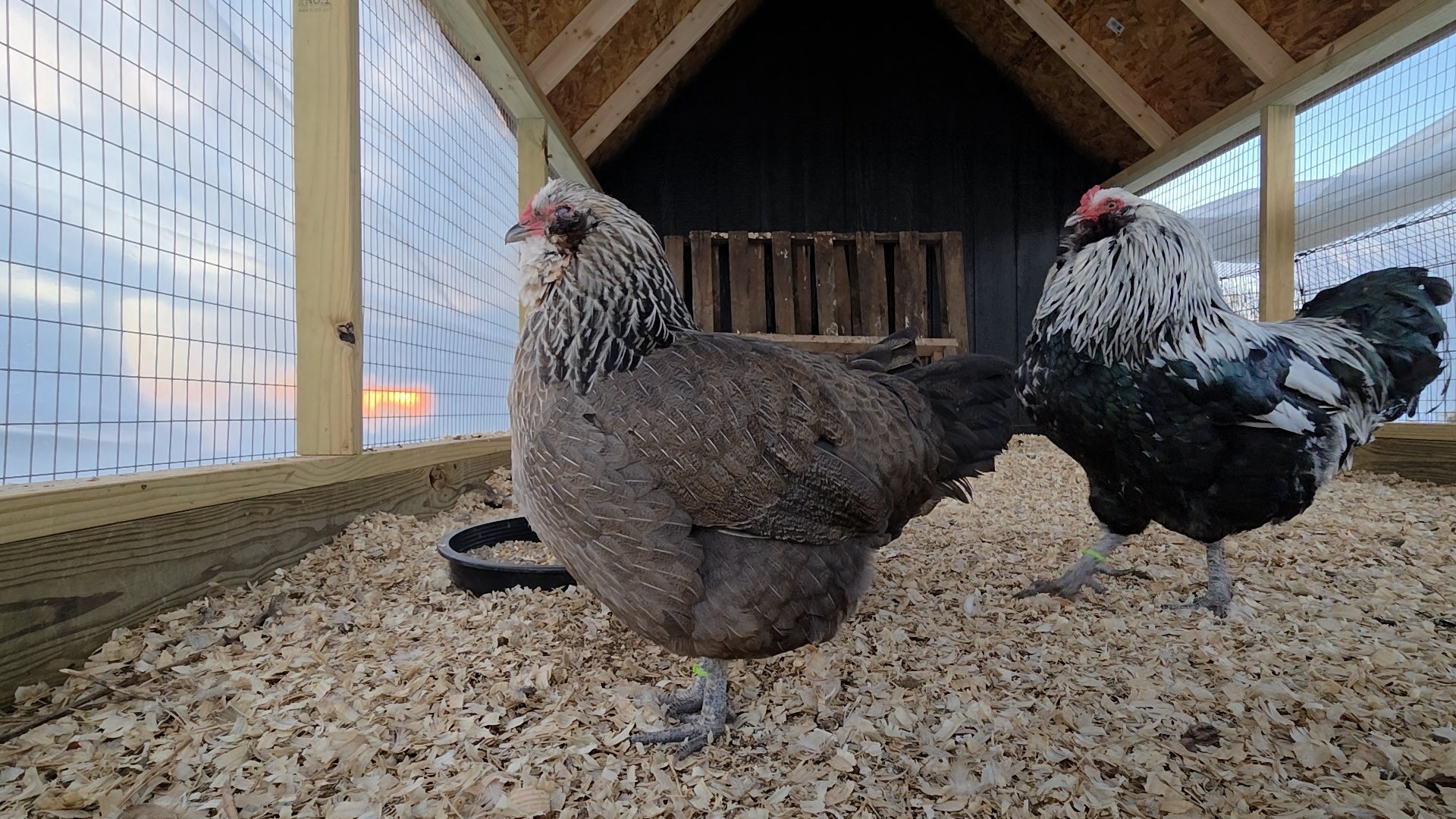
Silver Hen 2025
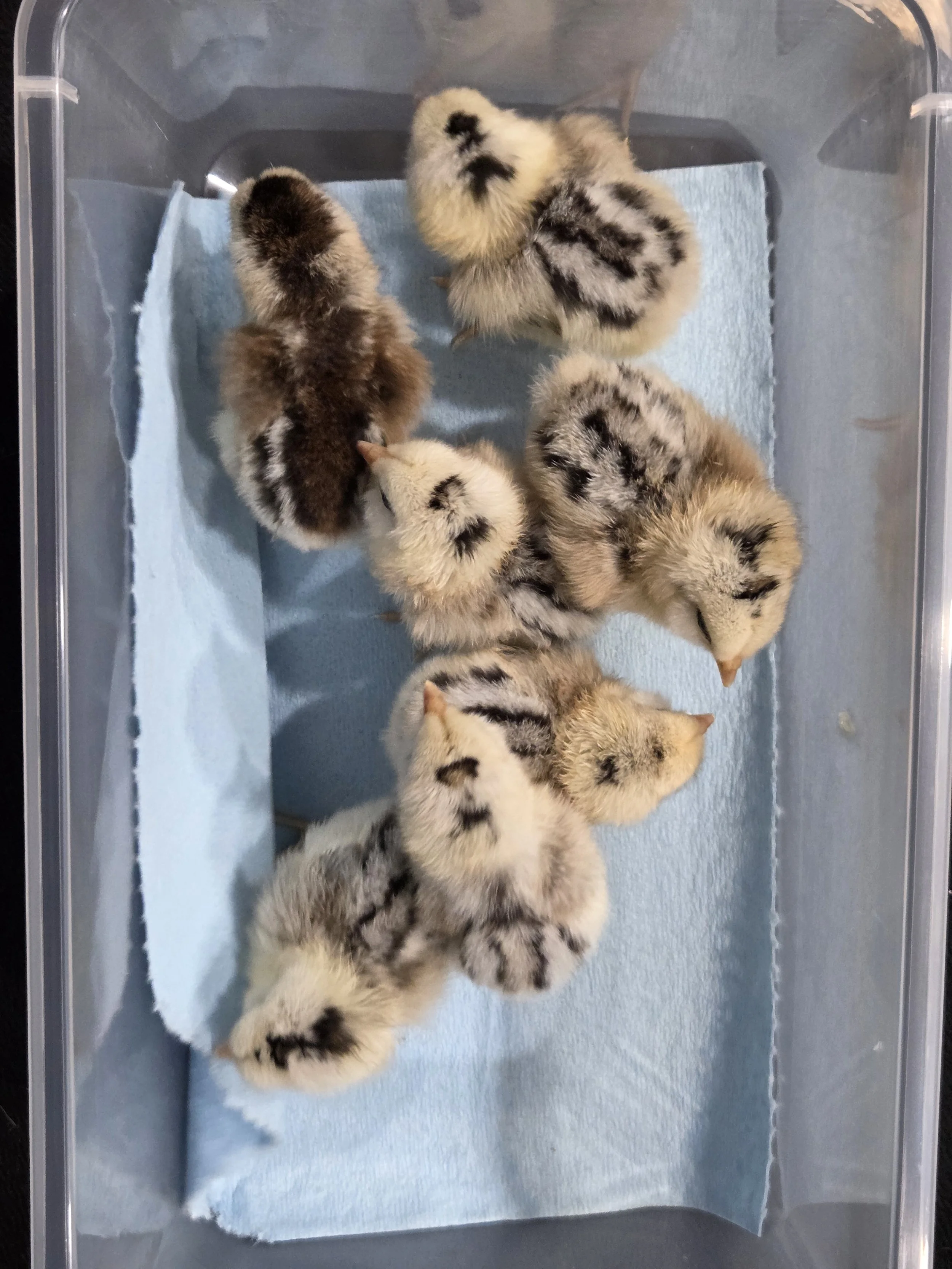
Mojo Hatchlings
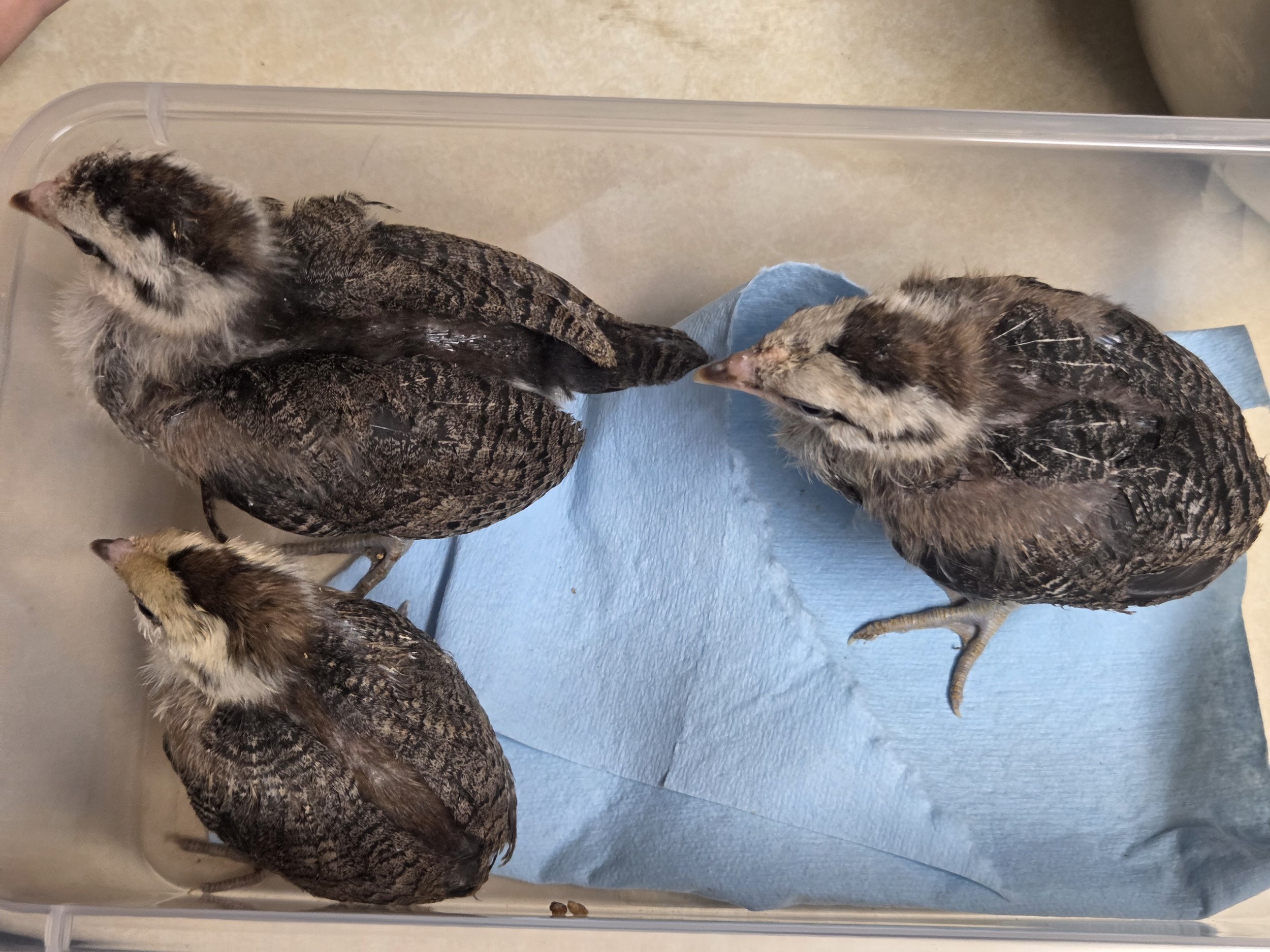
Growth Comparisons, first attempt at sexing
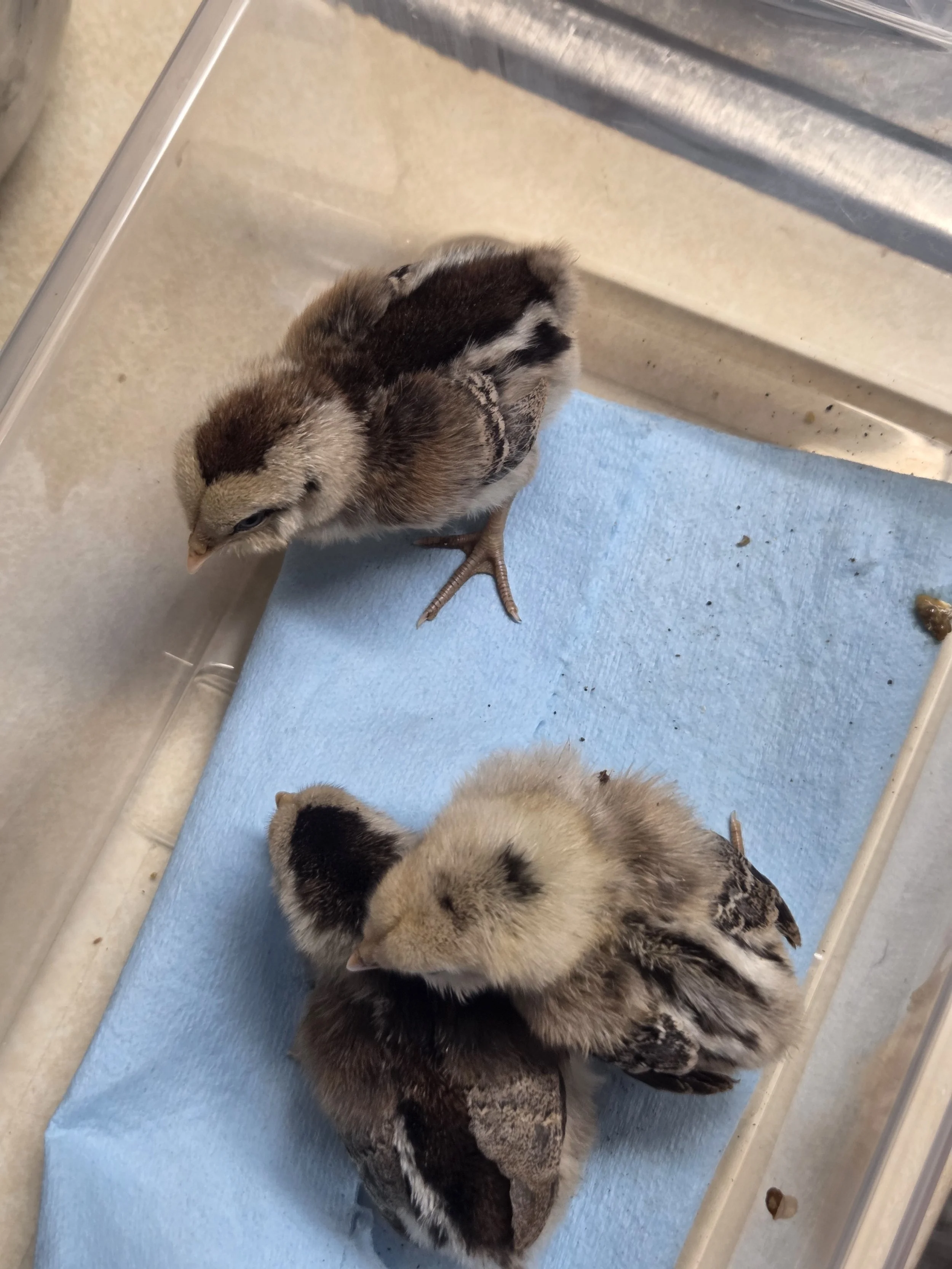
Growth Comparisons, first attempt at sexing
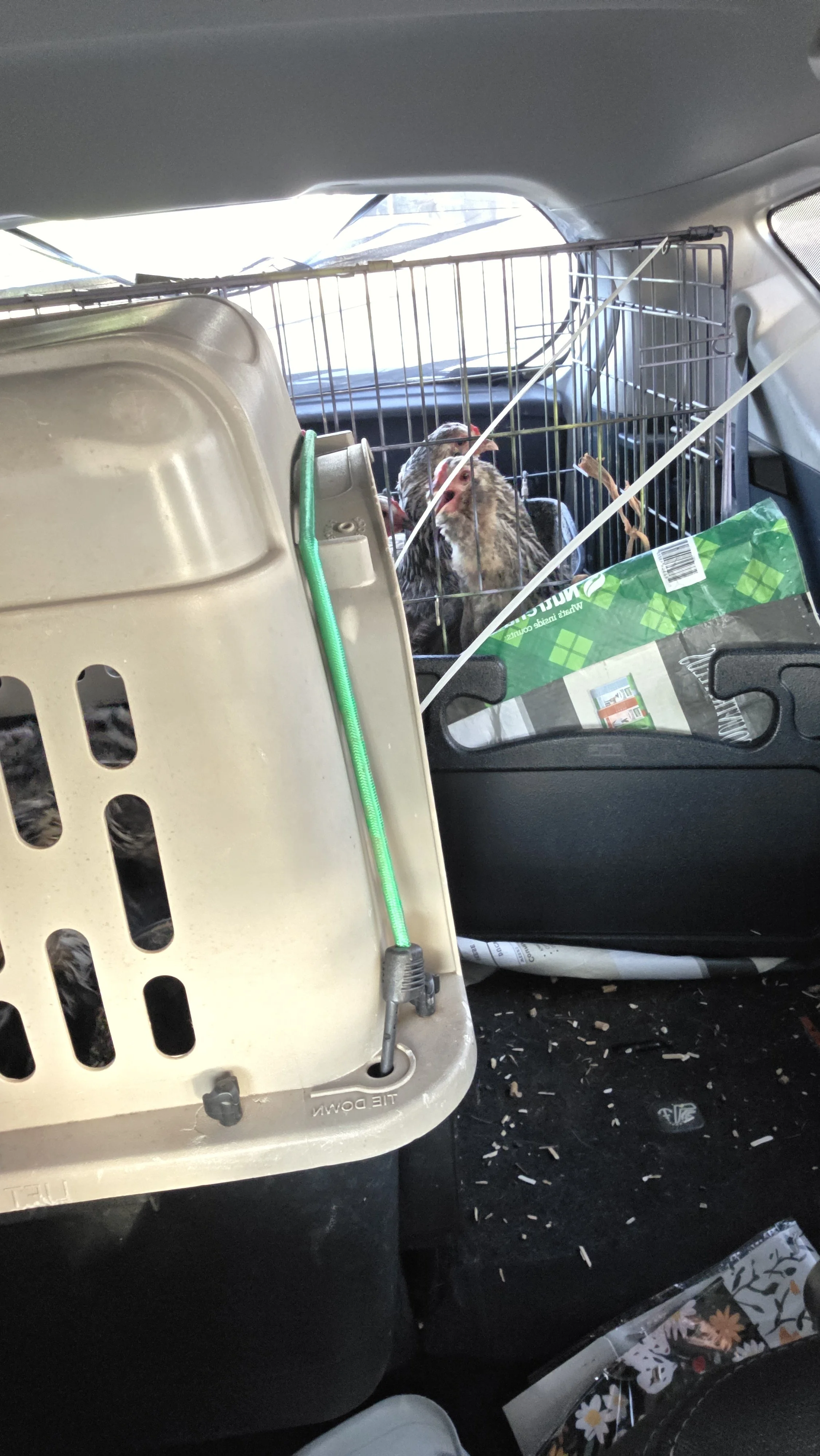
A very full car and a long drive home
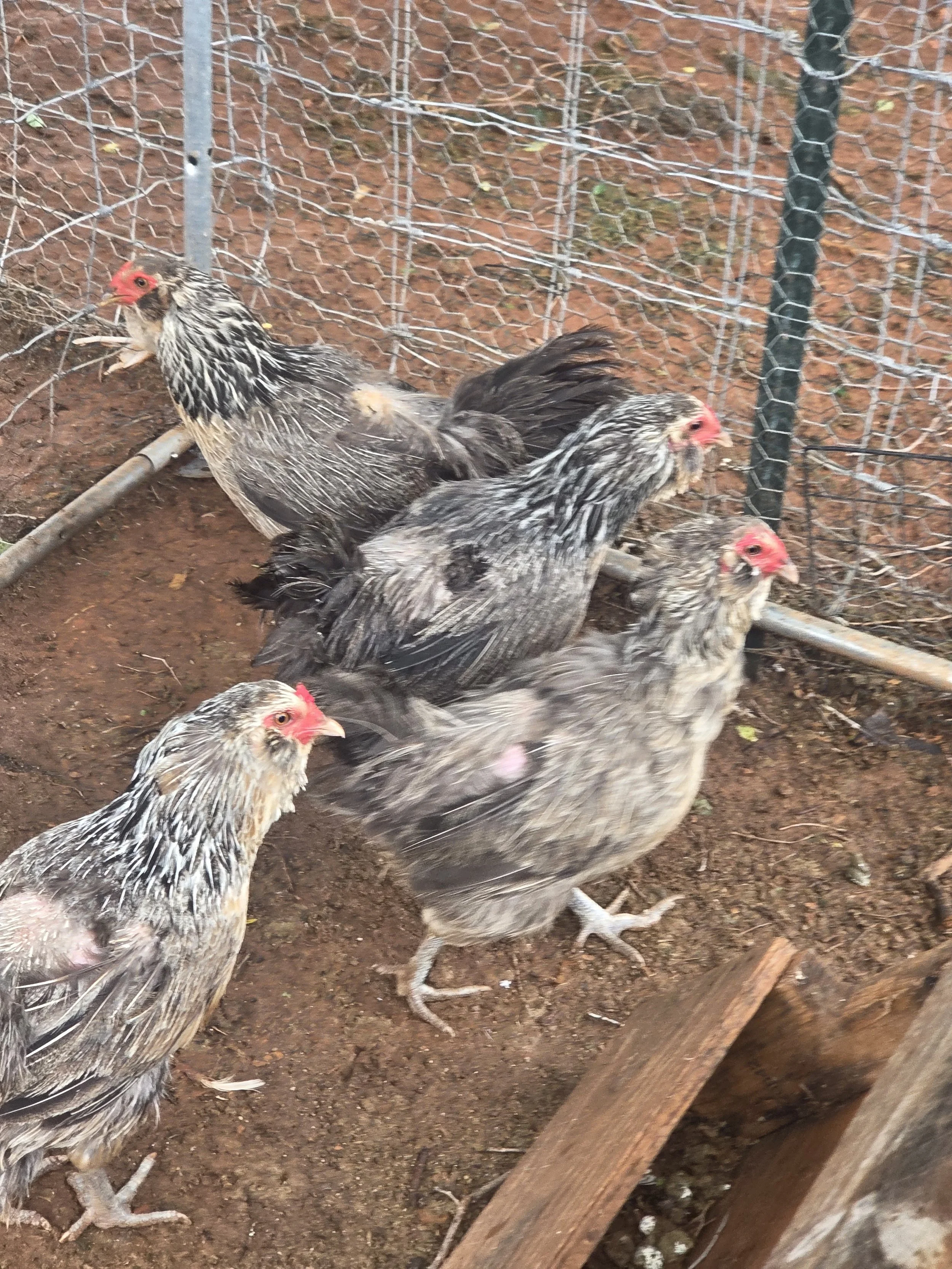
Scruffy Hens fresh off the road 2026
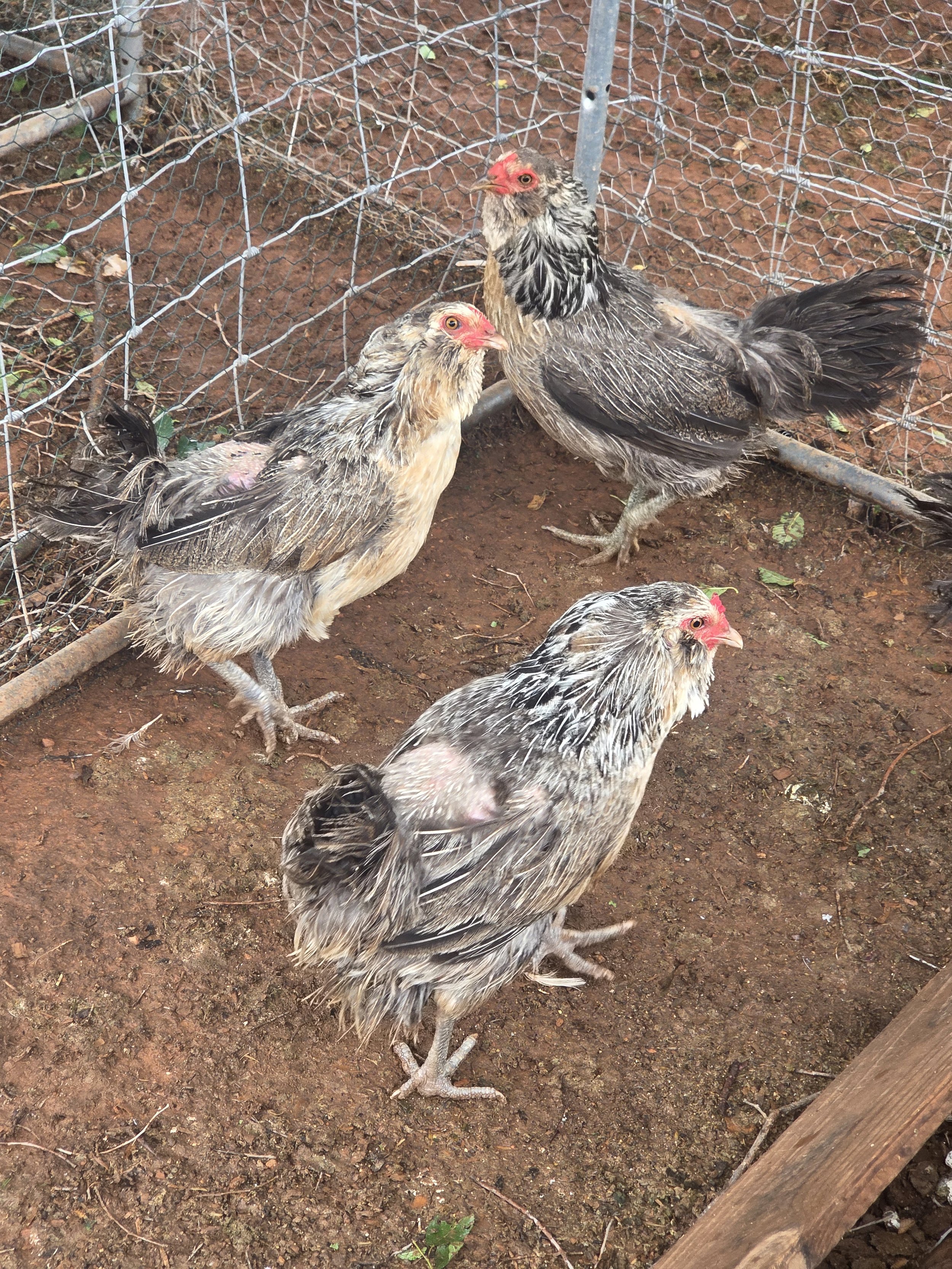
Scruffy Hens fresh off the road 2026
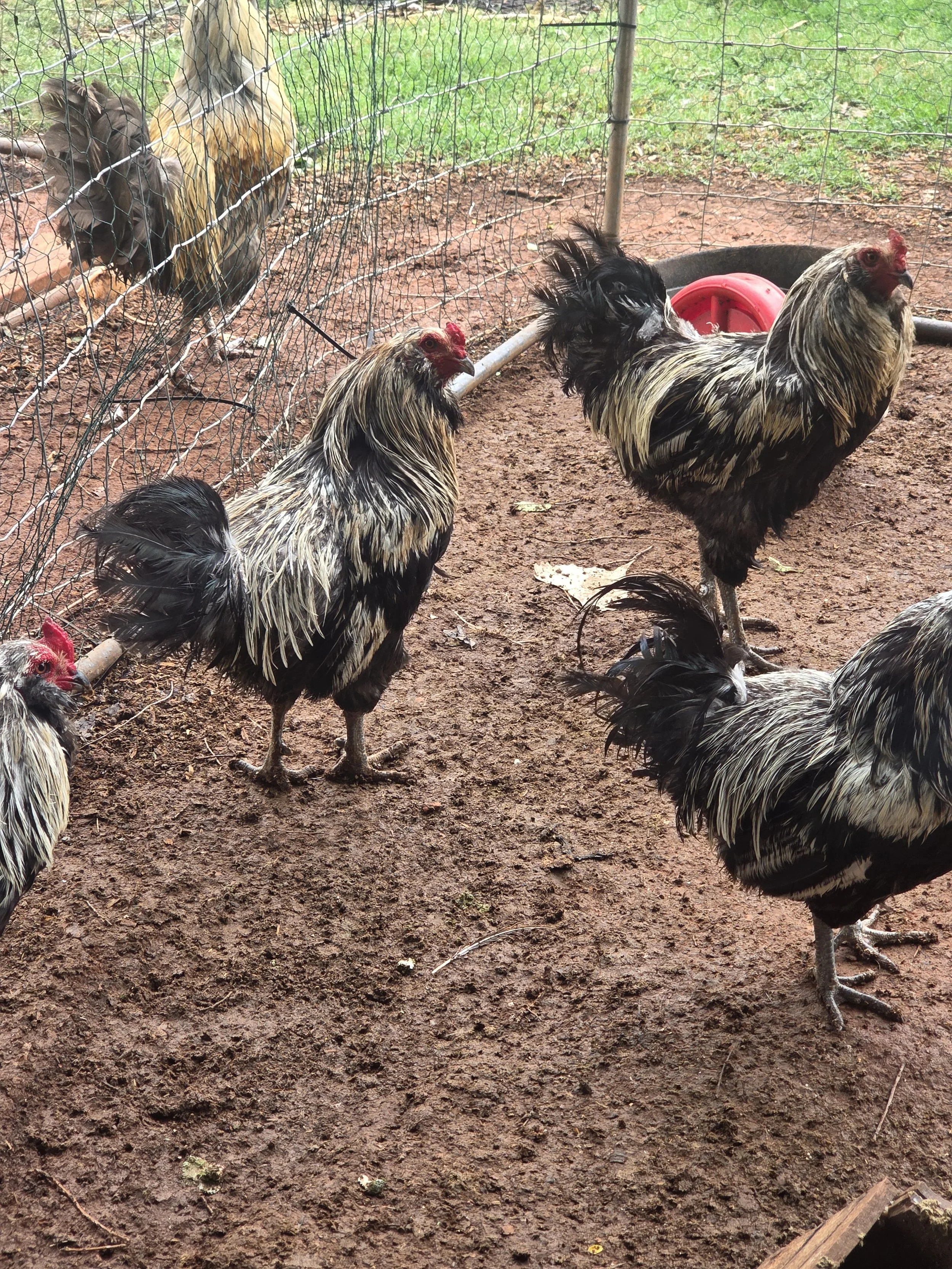
Scruffy Cocks fresh off the road 2026
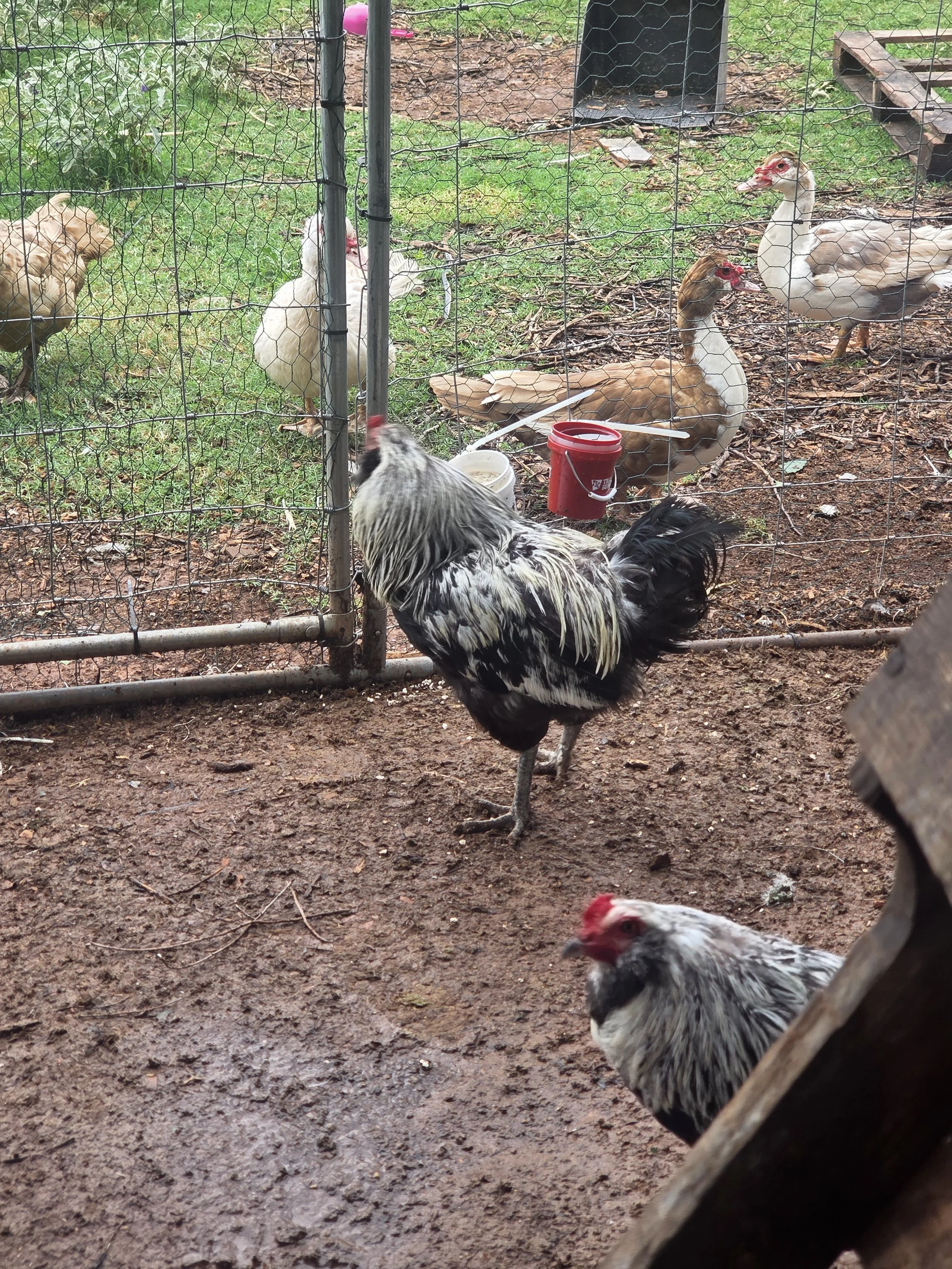
Scruffy Cocks fresh off the road 2026
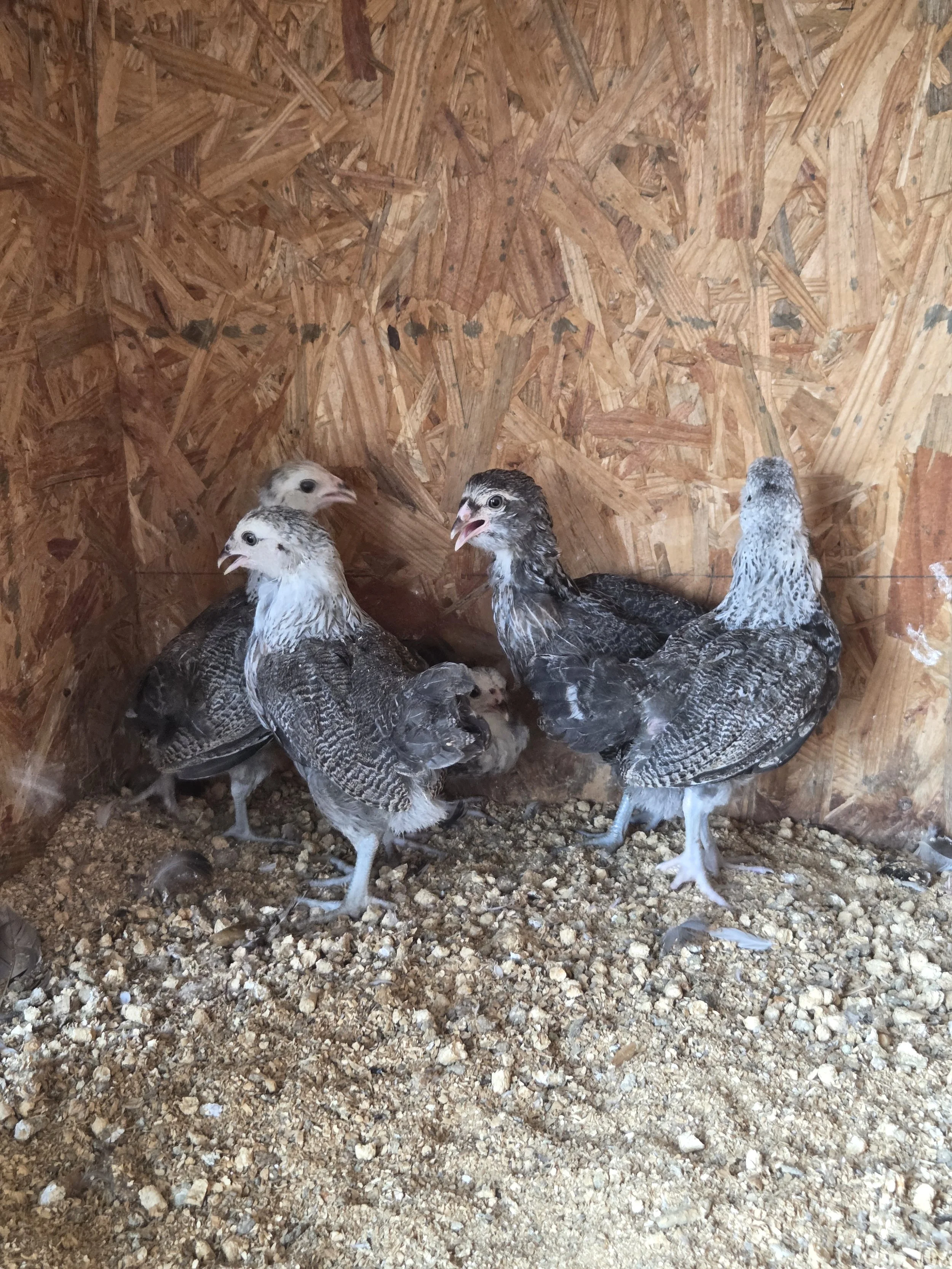
Grow outs 2026
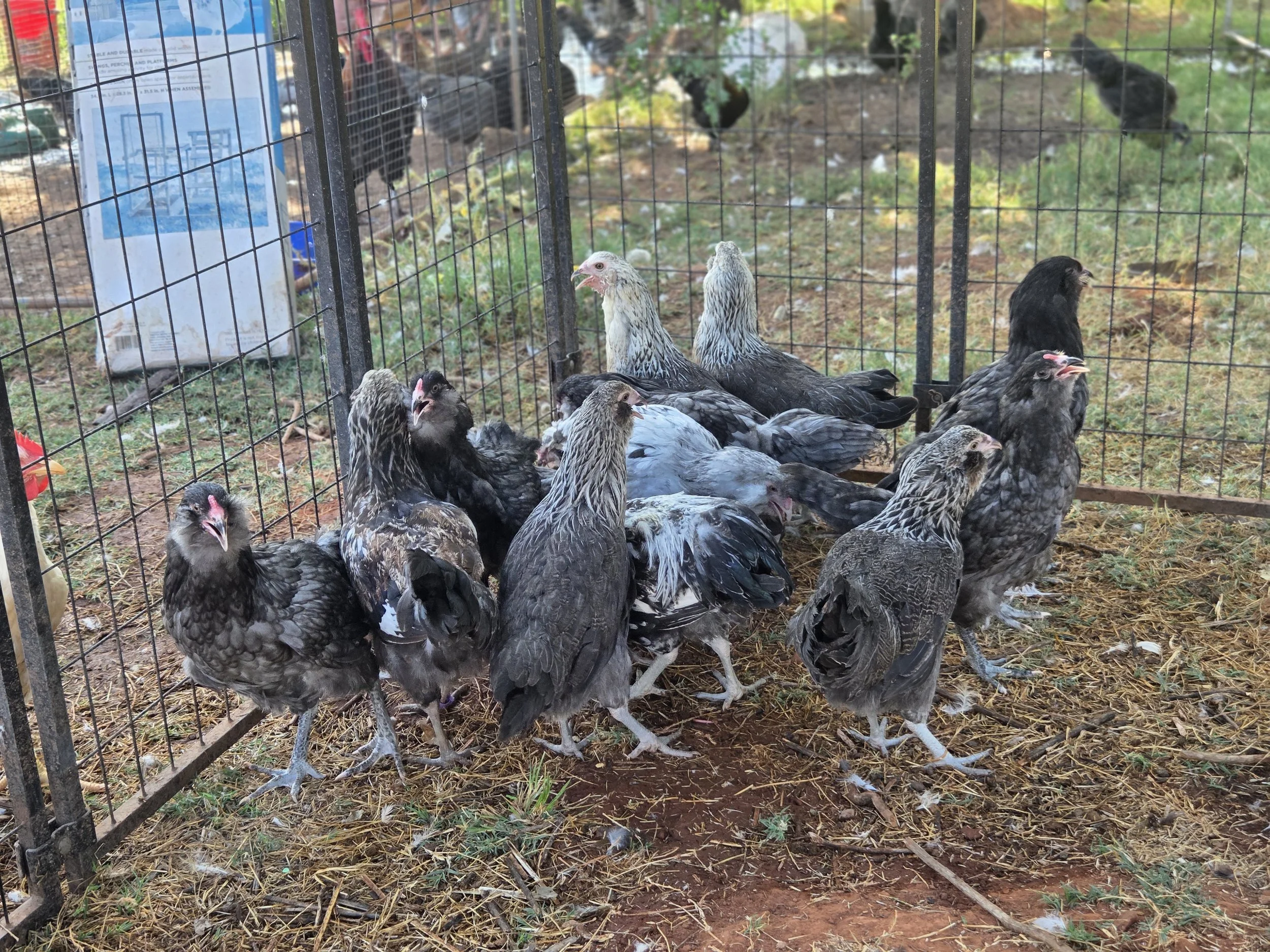
The 2026 ameraucana grow outs
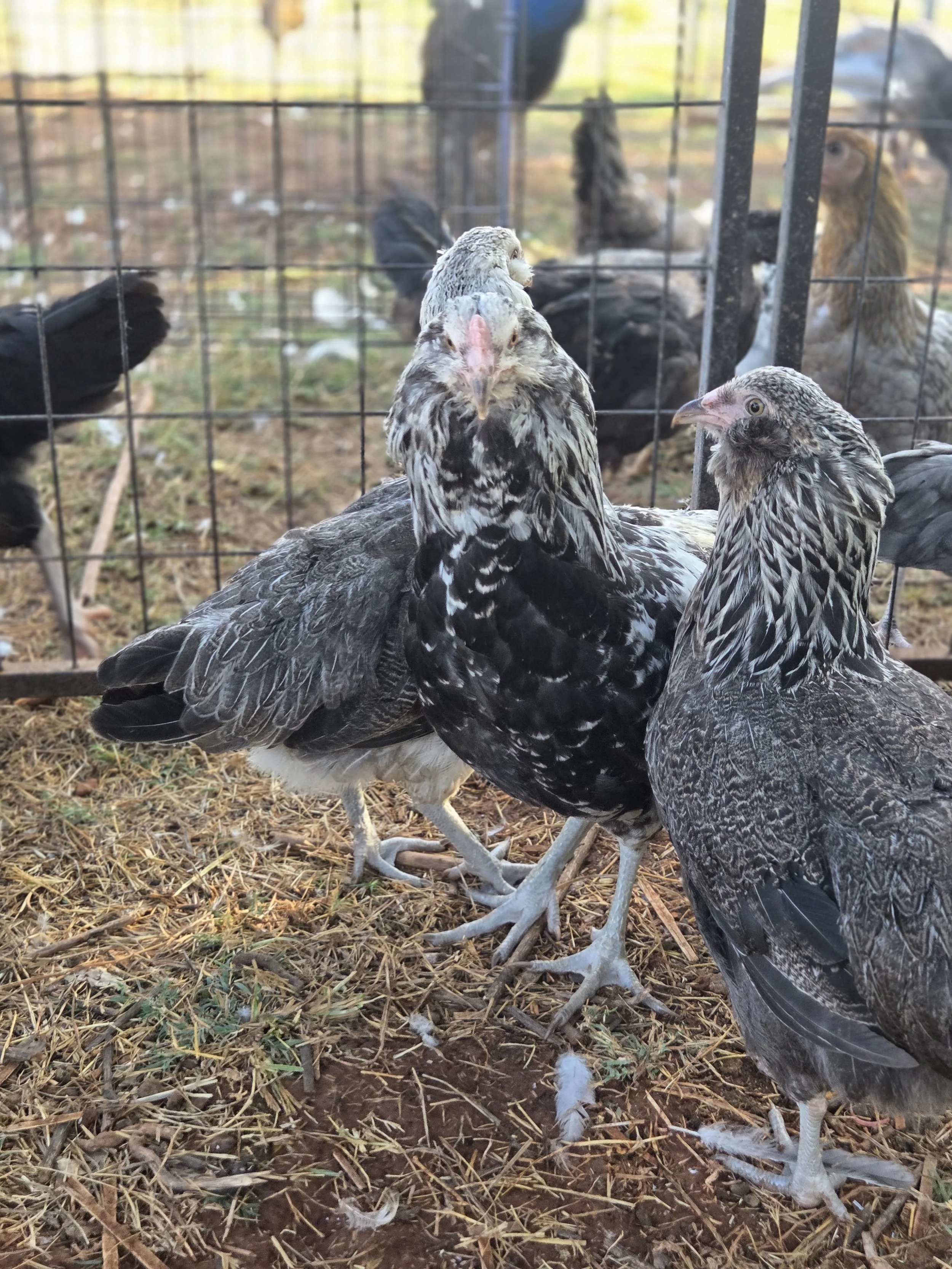
The 2026 ameraucana grow outs
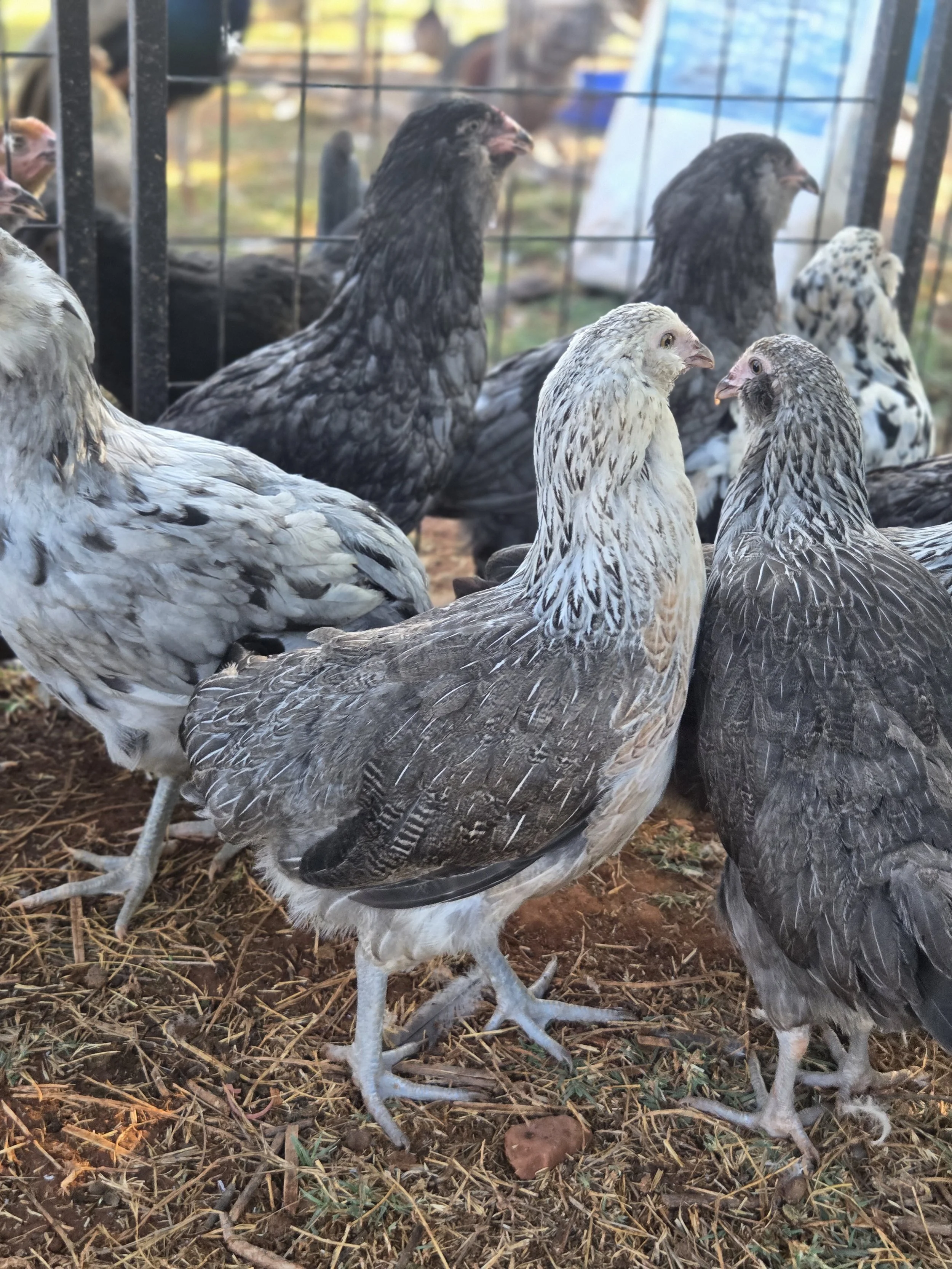
The 2026 ameraucana grow outs
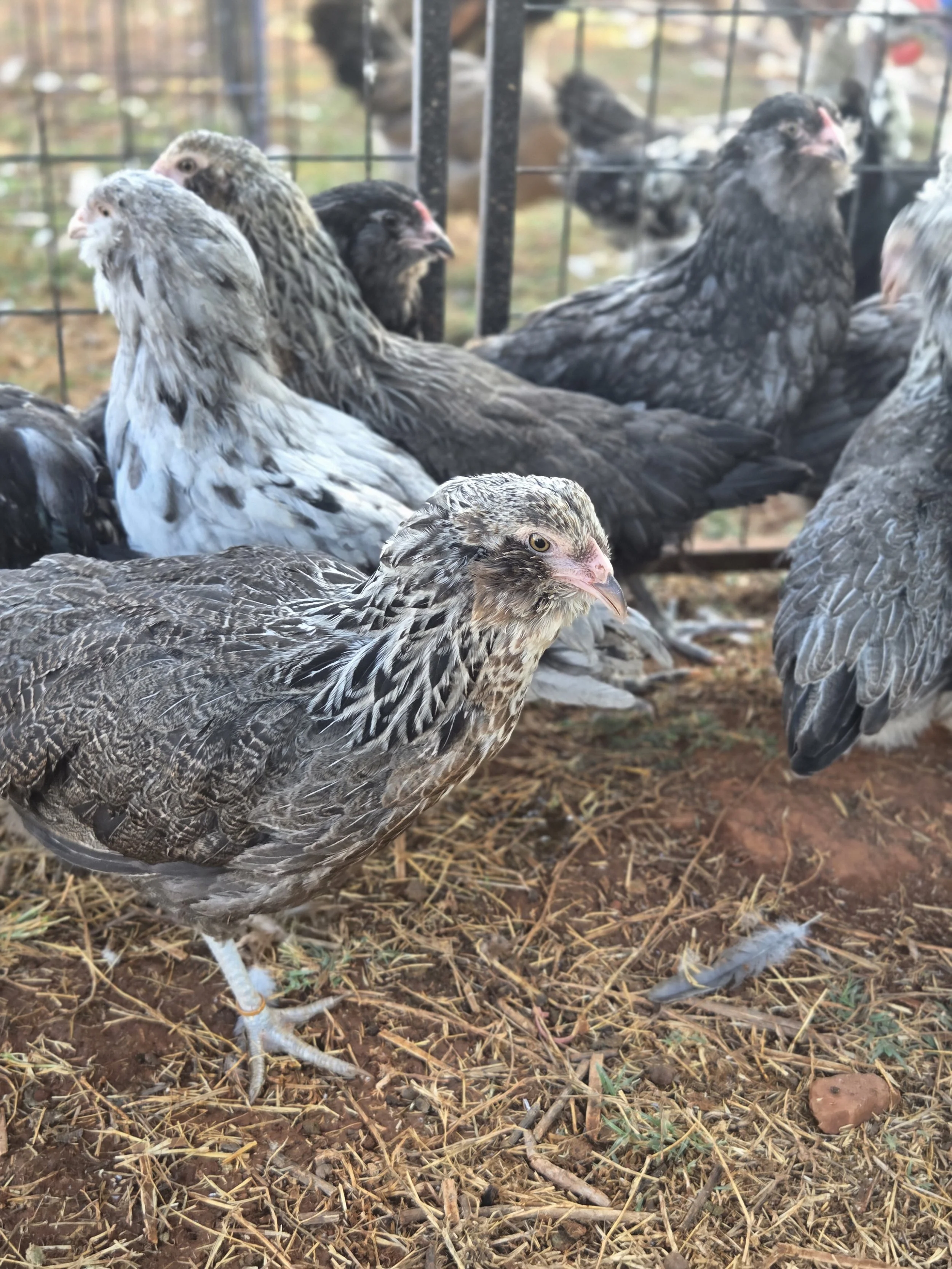
Steve liked this Pullet - pulled her to show
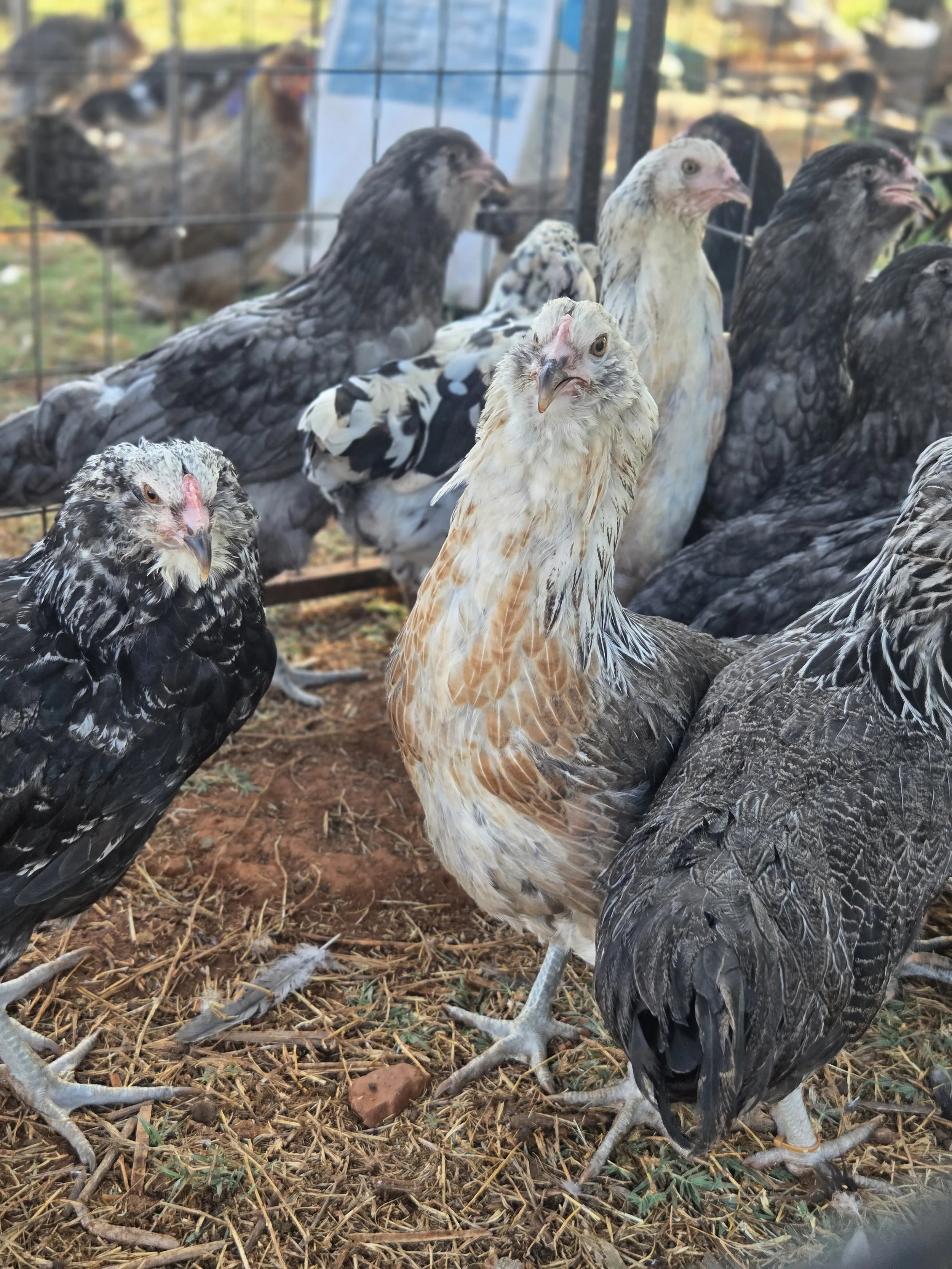
A Mojo pullet
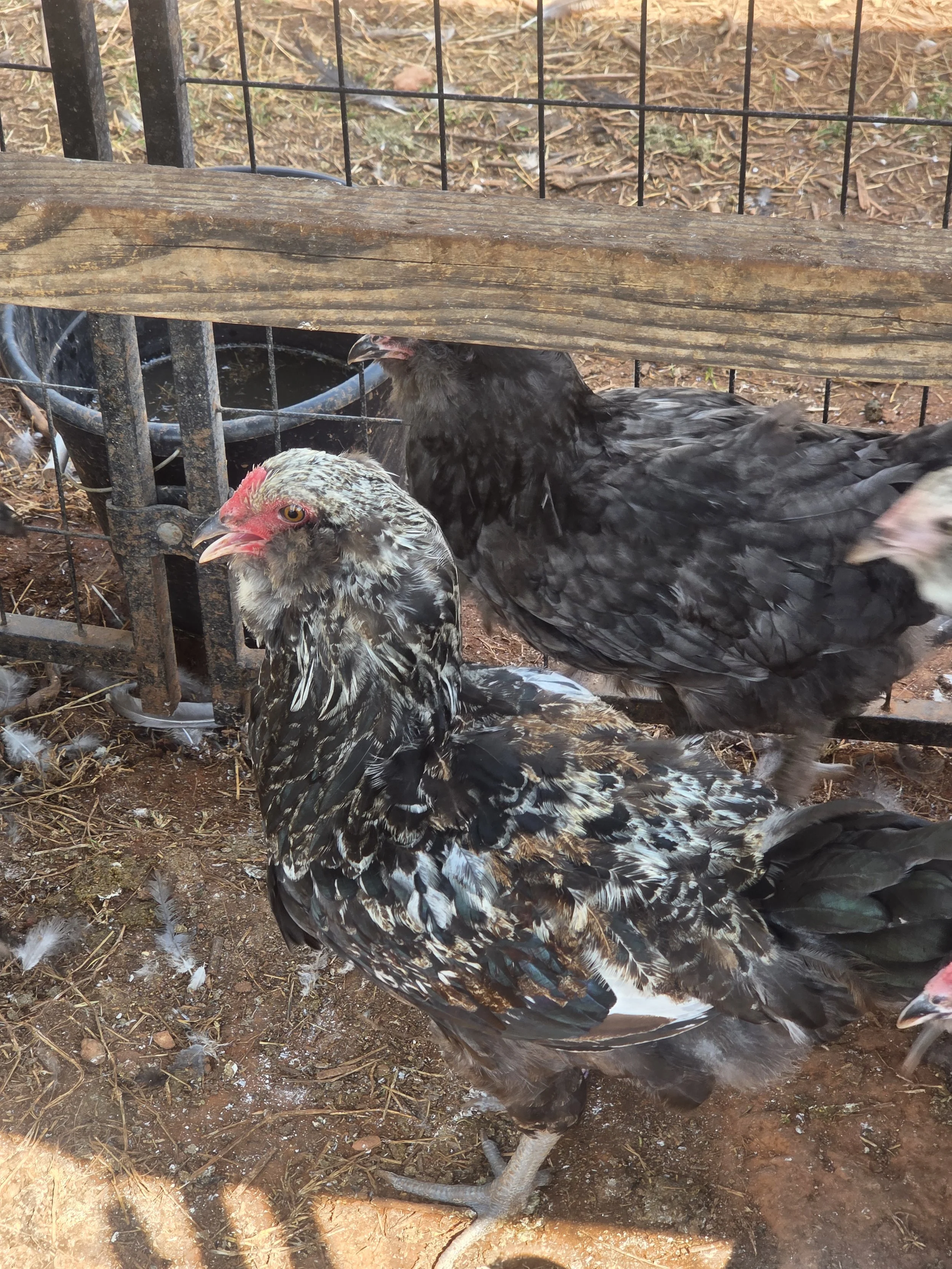
Orion's son - unfortunately is a cull due to red
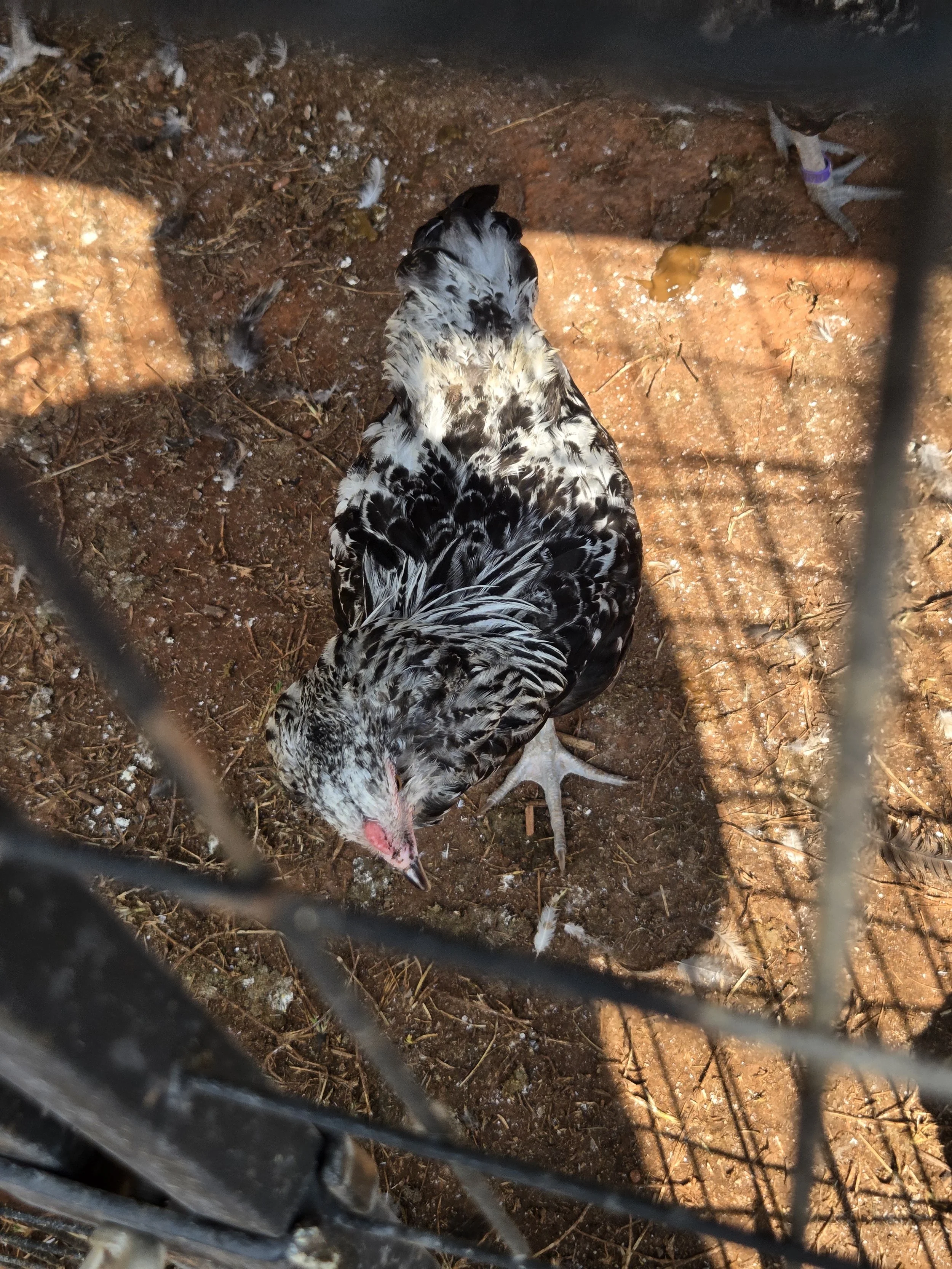
A Mojo cockerel
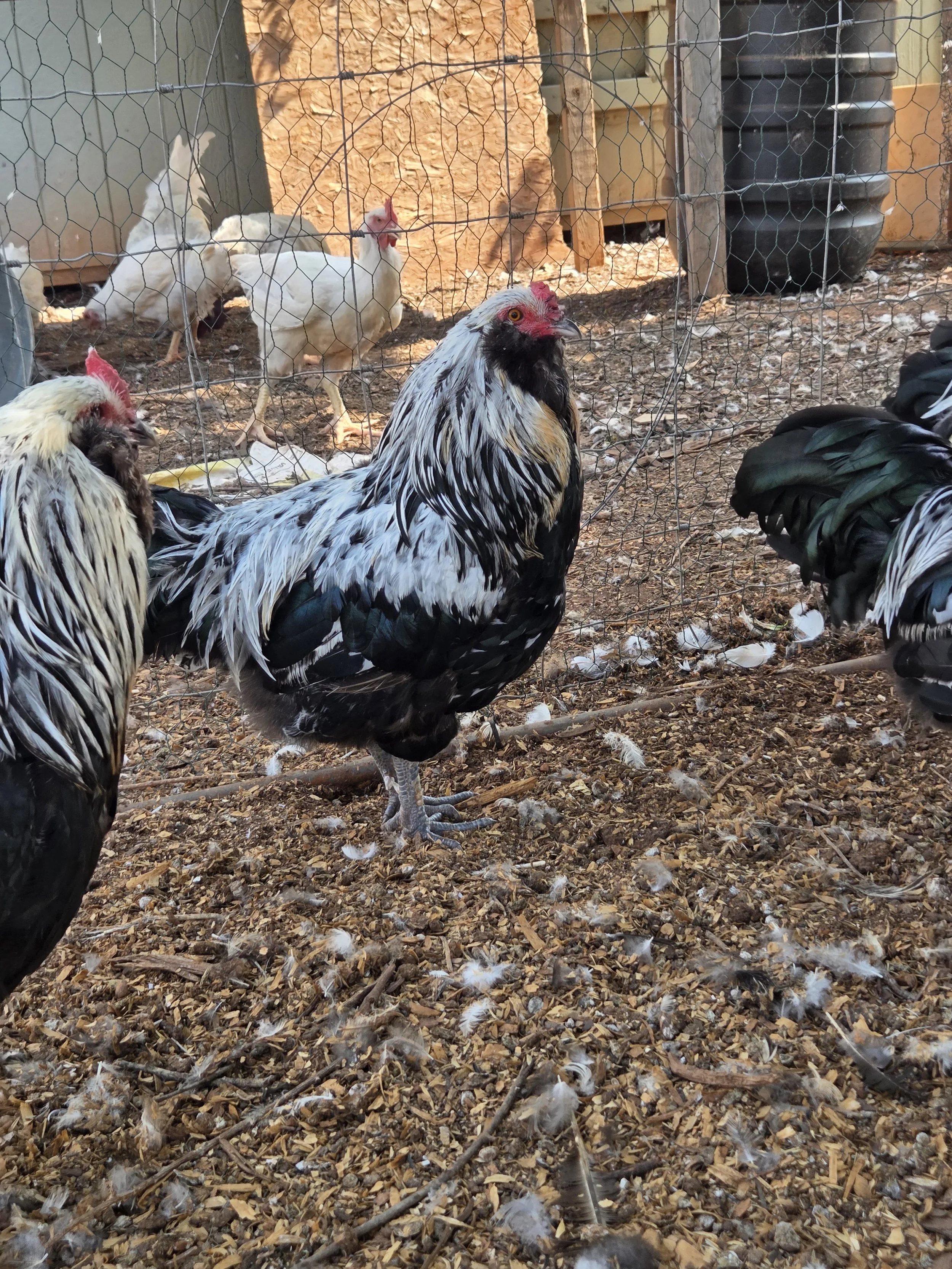
Making decisions on which cock to show
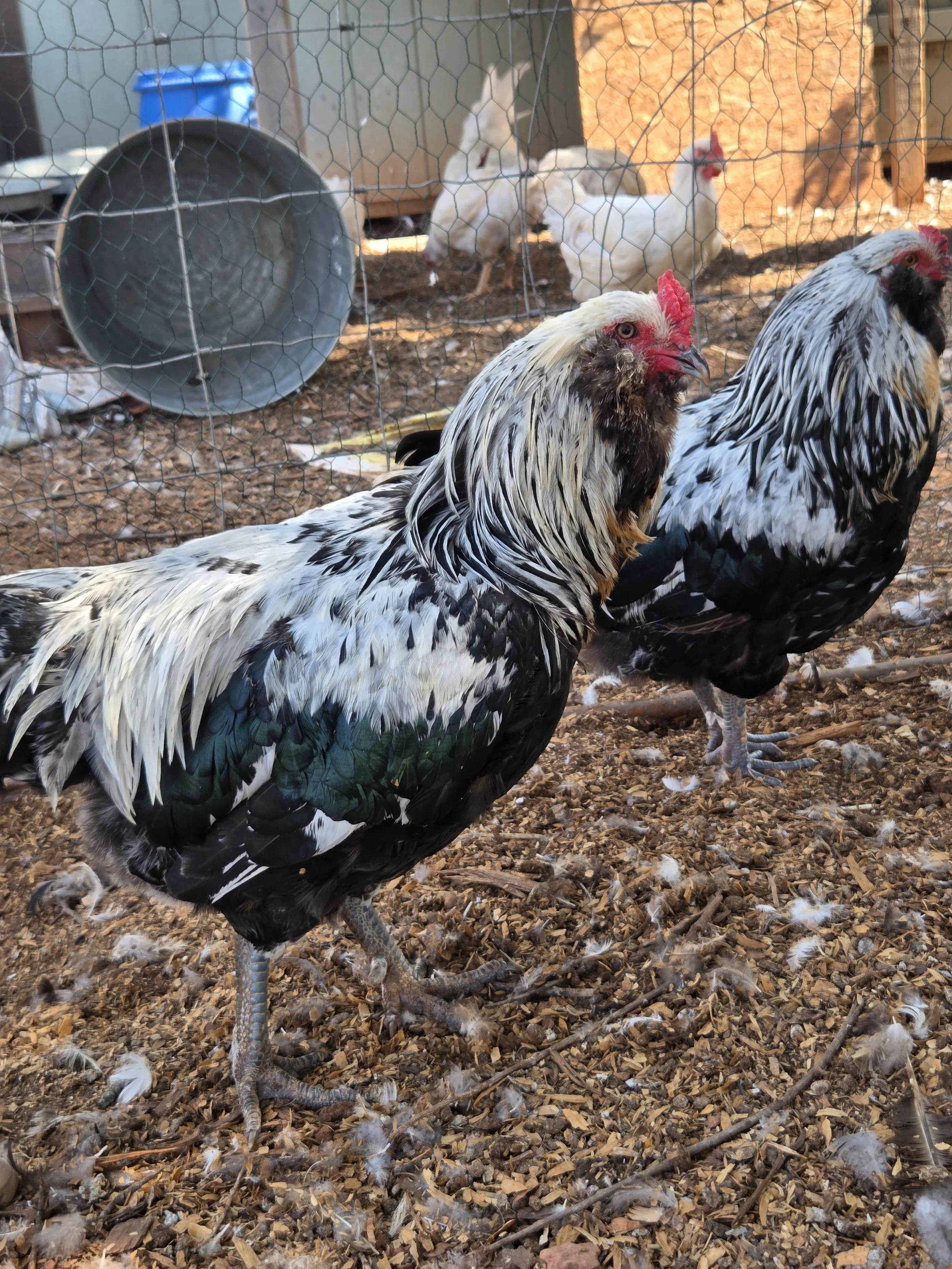
Making decisions on which cock to show - this one has less brass but that comb needs work
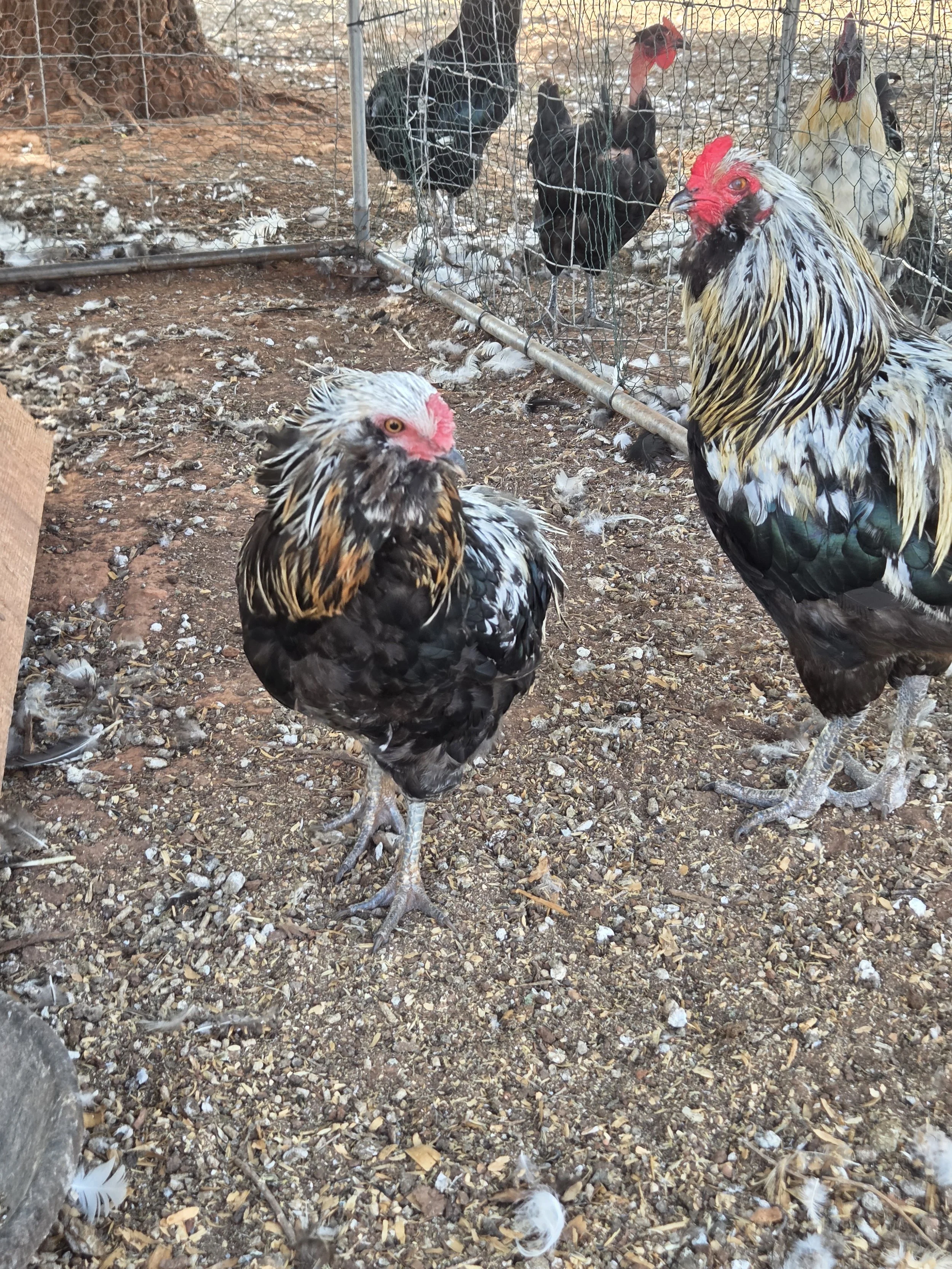
This is the bottom of the pecking order cock
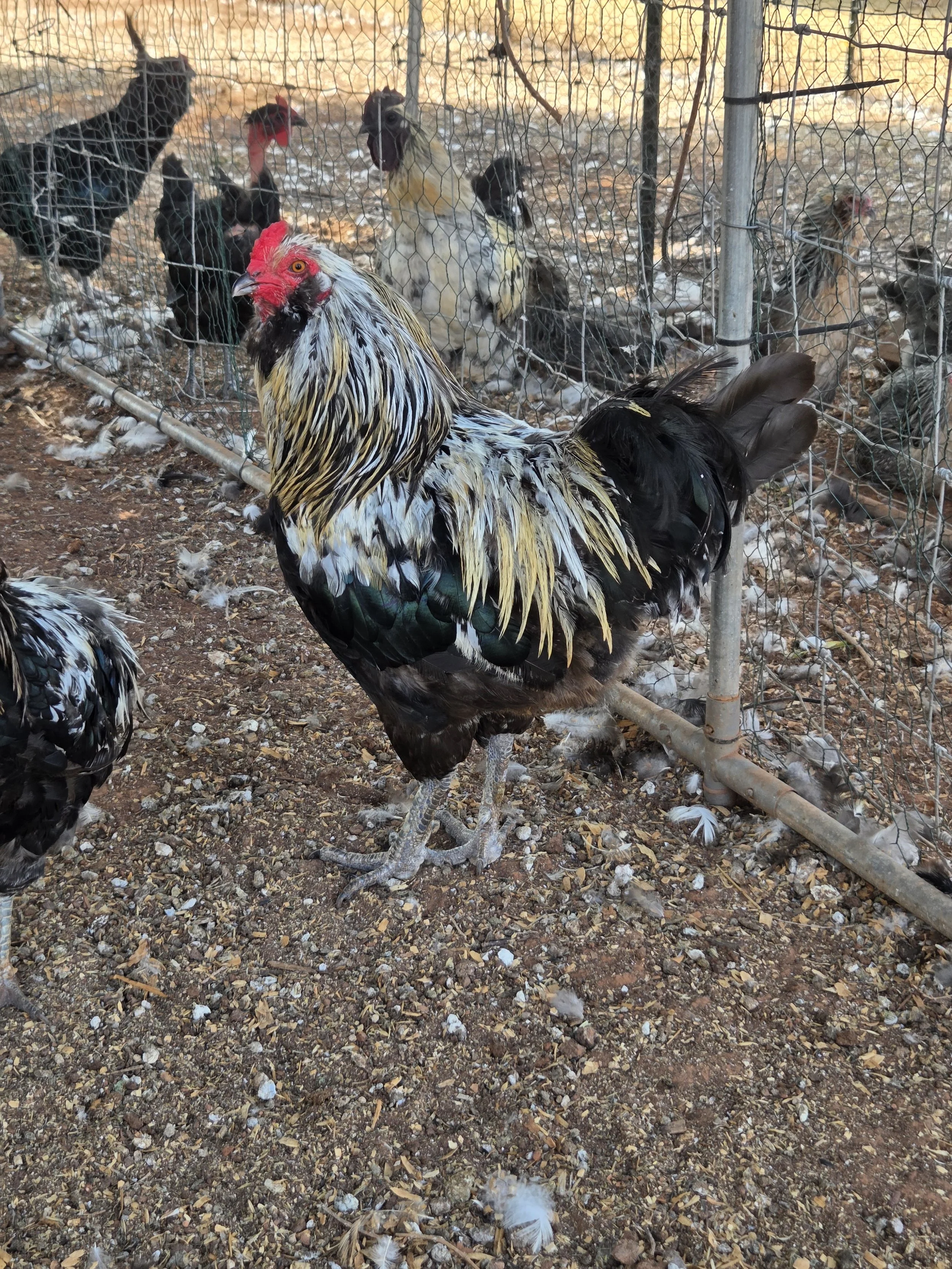
One of the older cocks, I'm not a fan of his comb but that can be fixed.
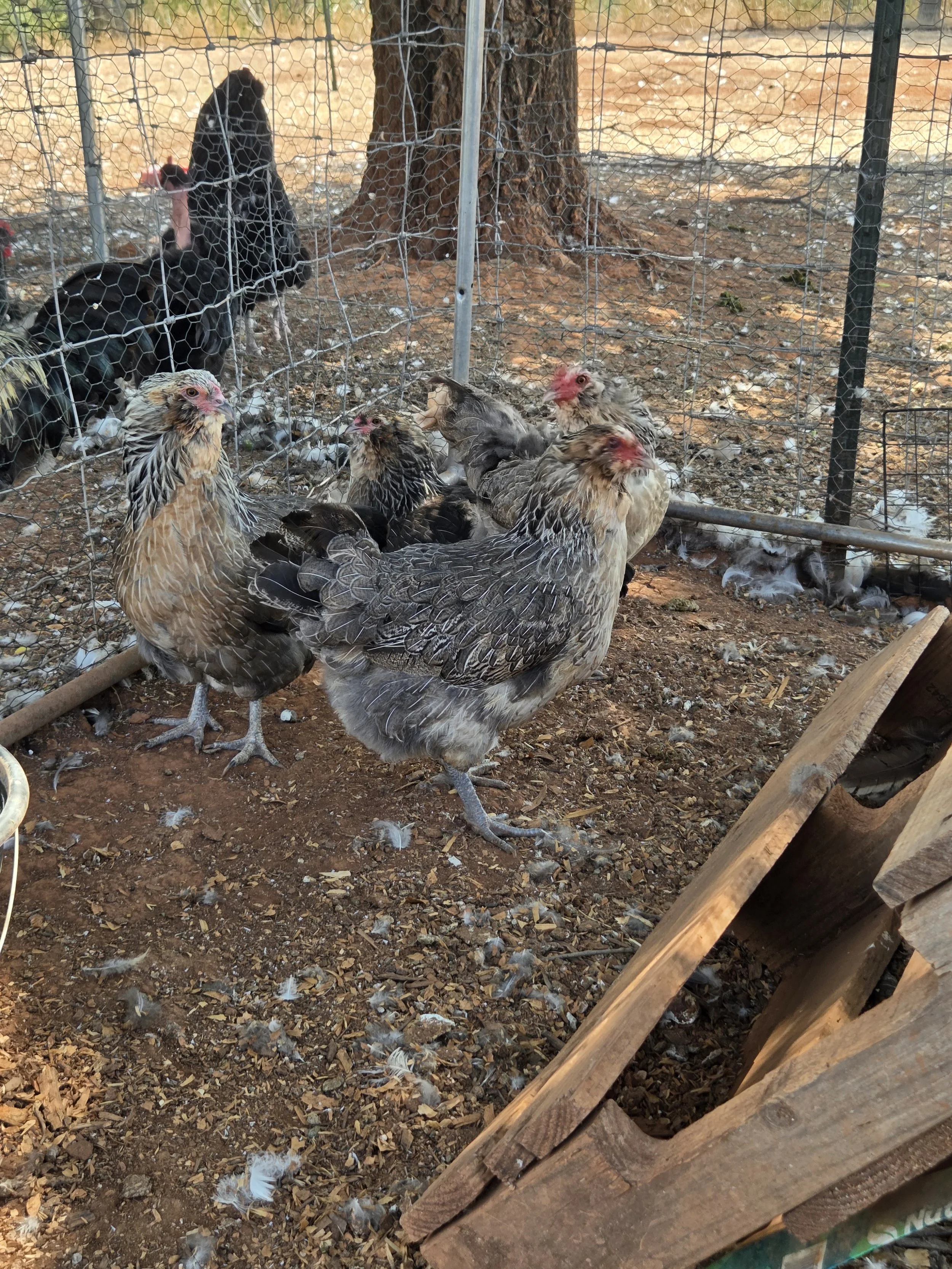
The hens are looking less scruffy now!
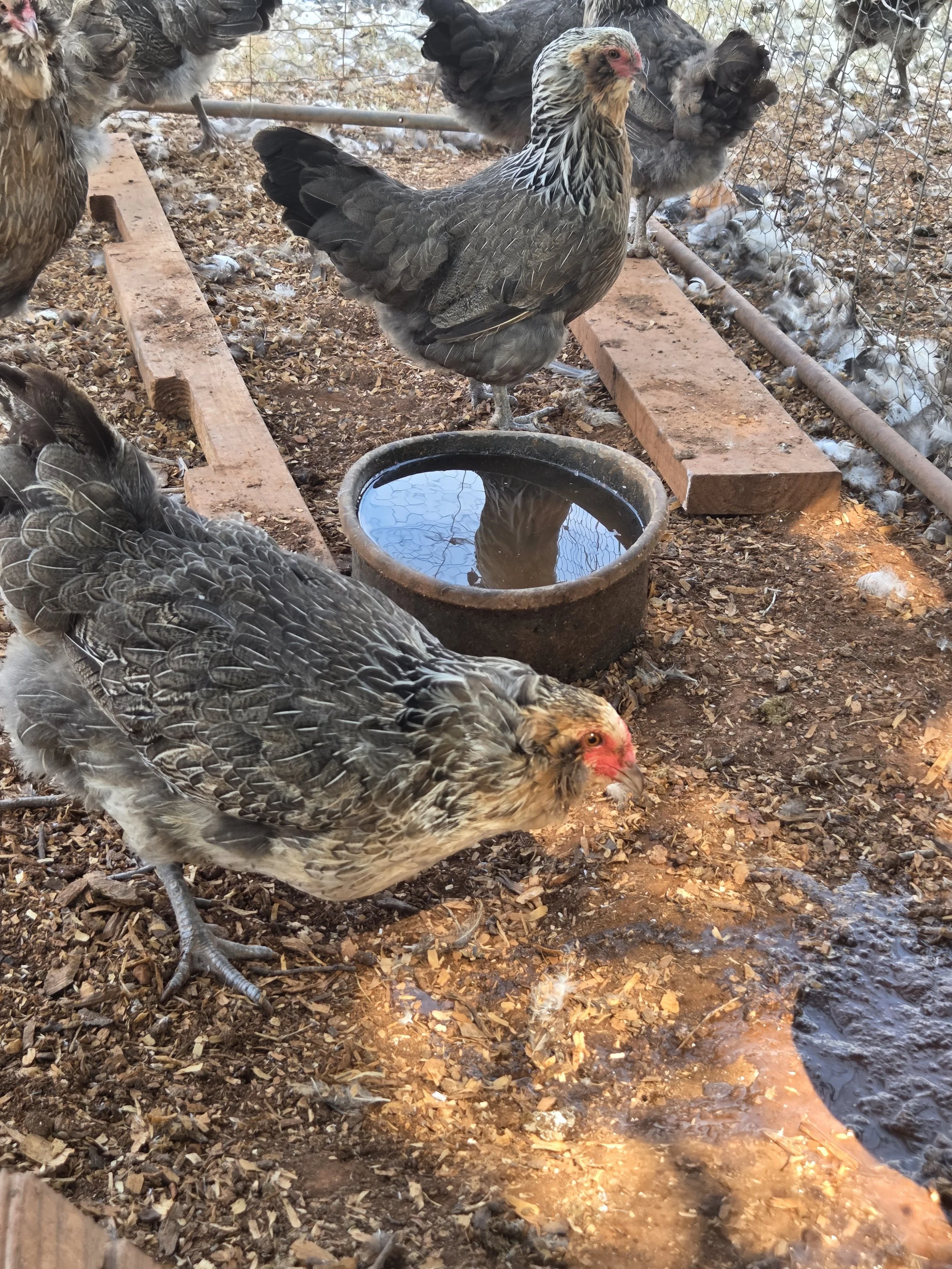
The hens are looking less scruffy now!
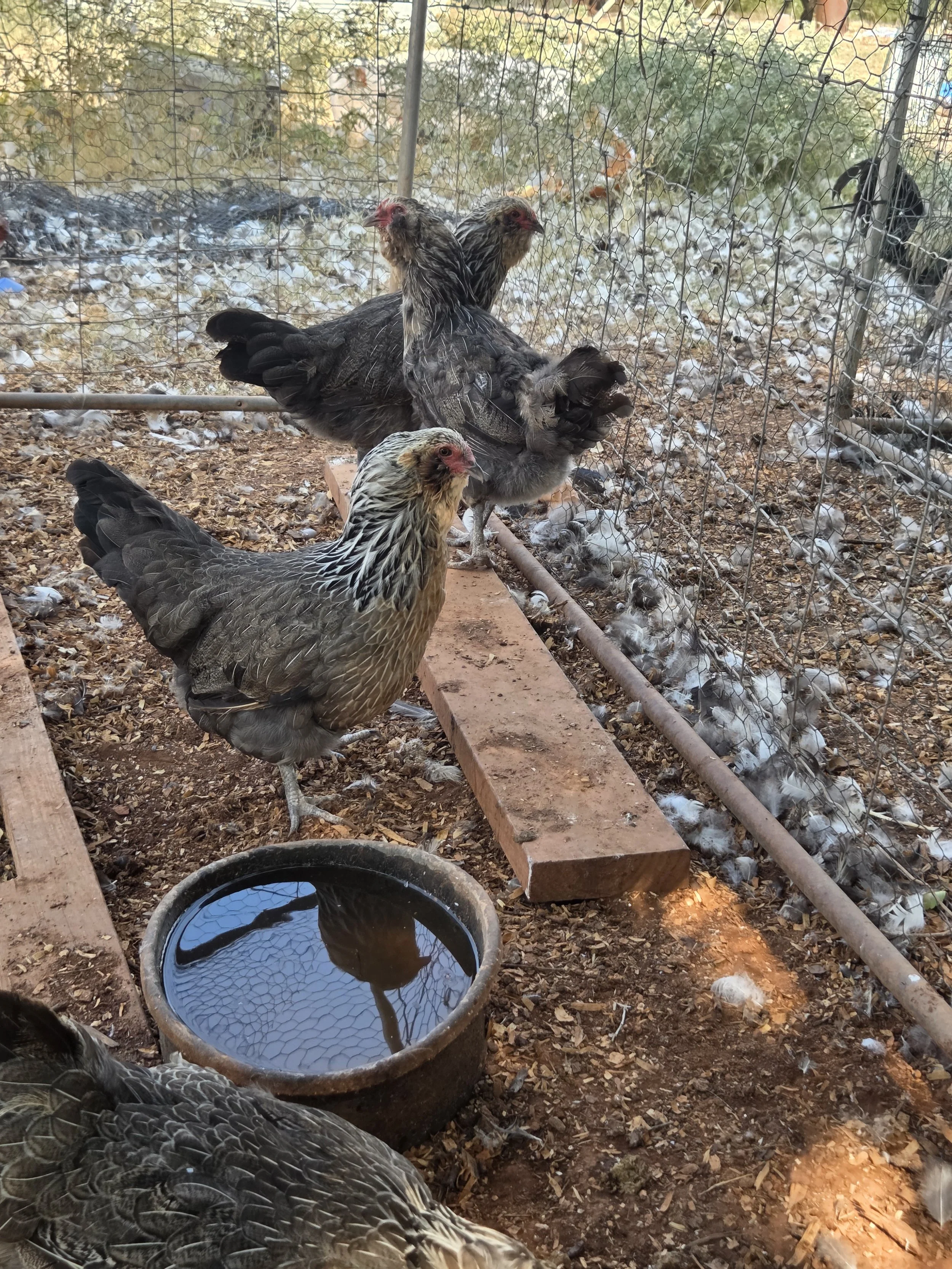
Steve picked this hen to take to the show, unfortunately she has a small infection from a rub wound
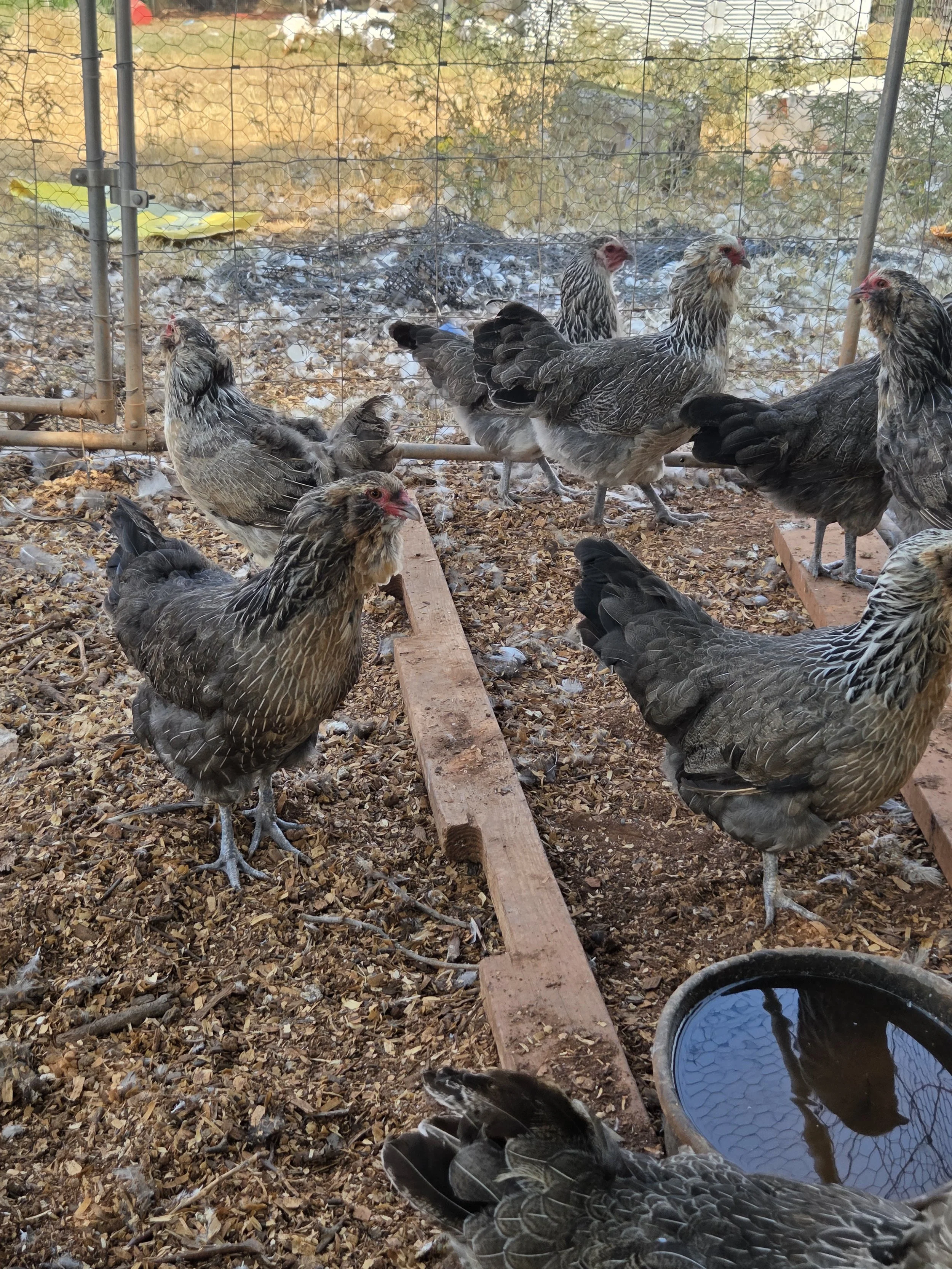
These girls molted in well.
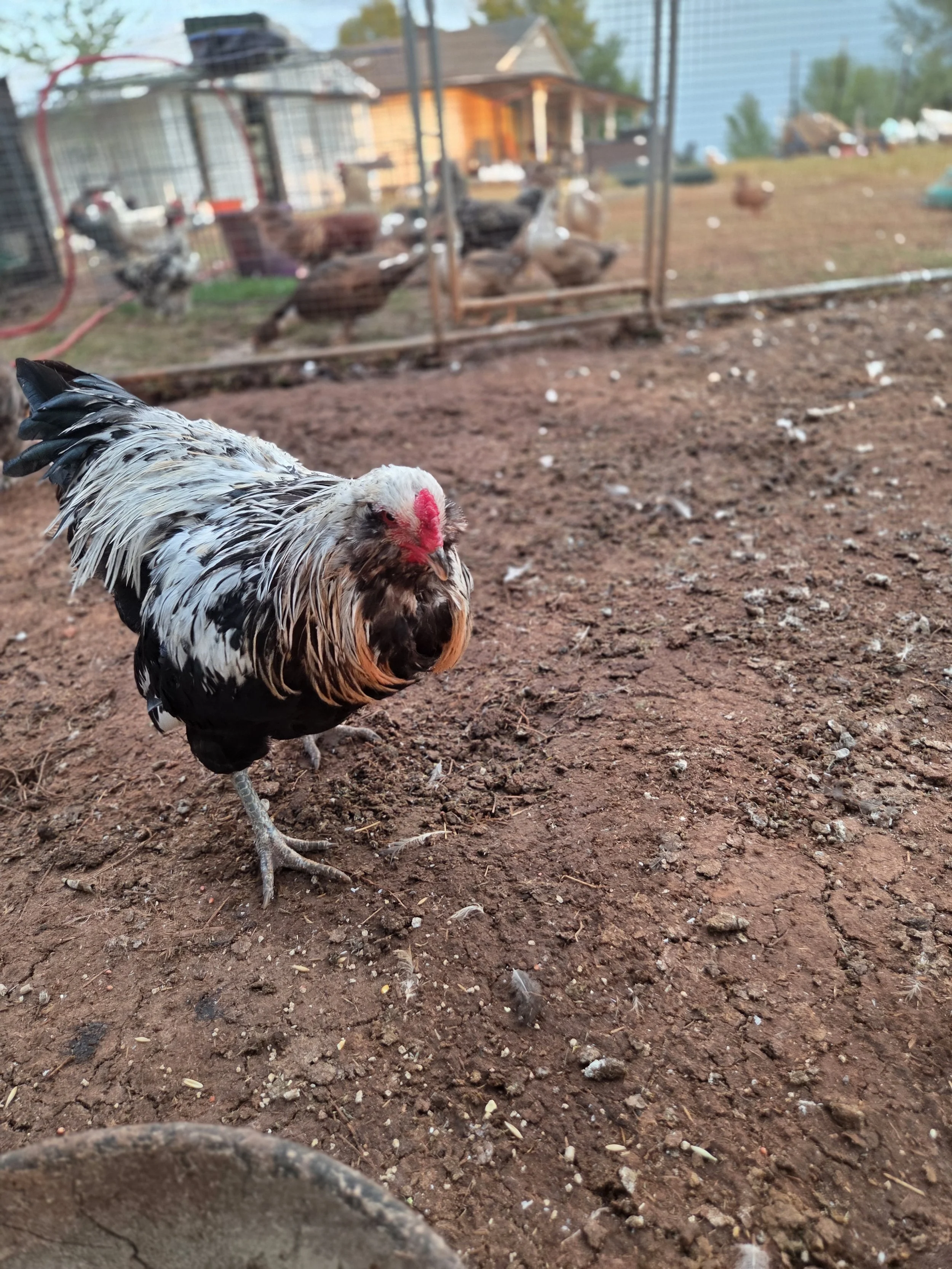
The Fall/Winter 2026 breeding cock
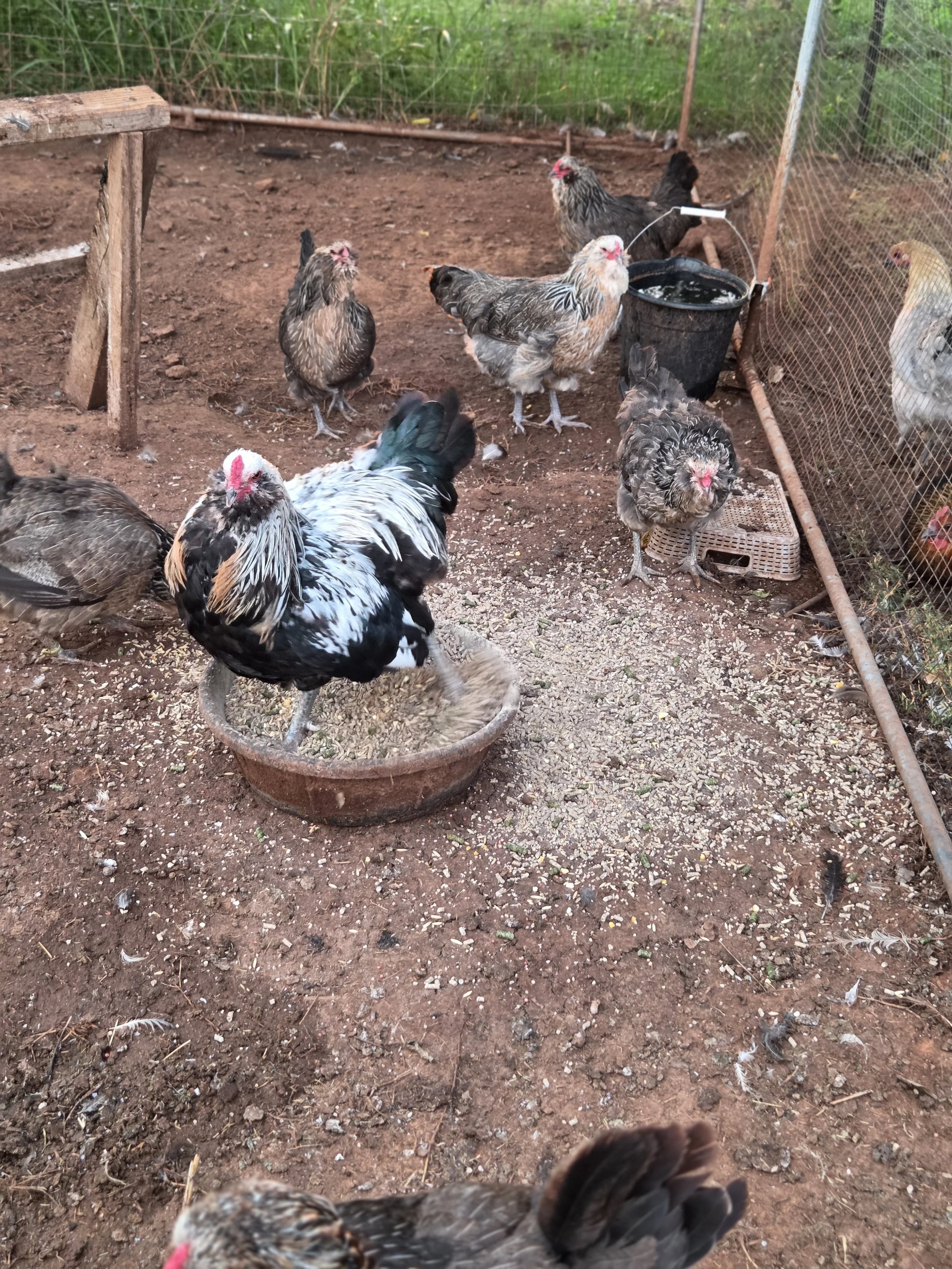
The Fall/Winter 2026 breeding group
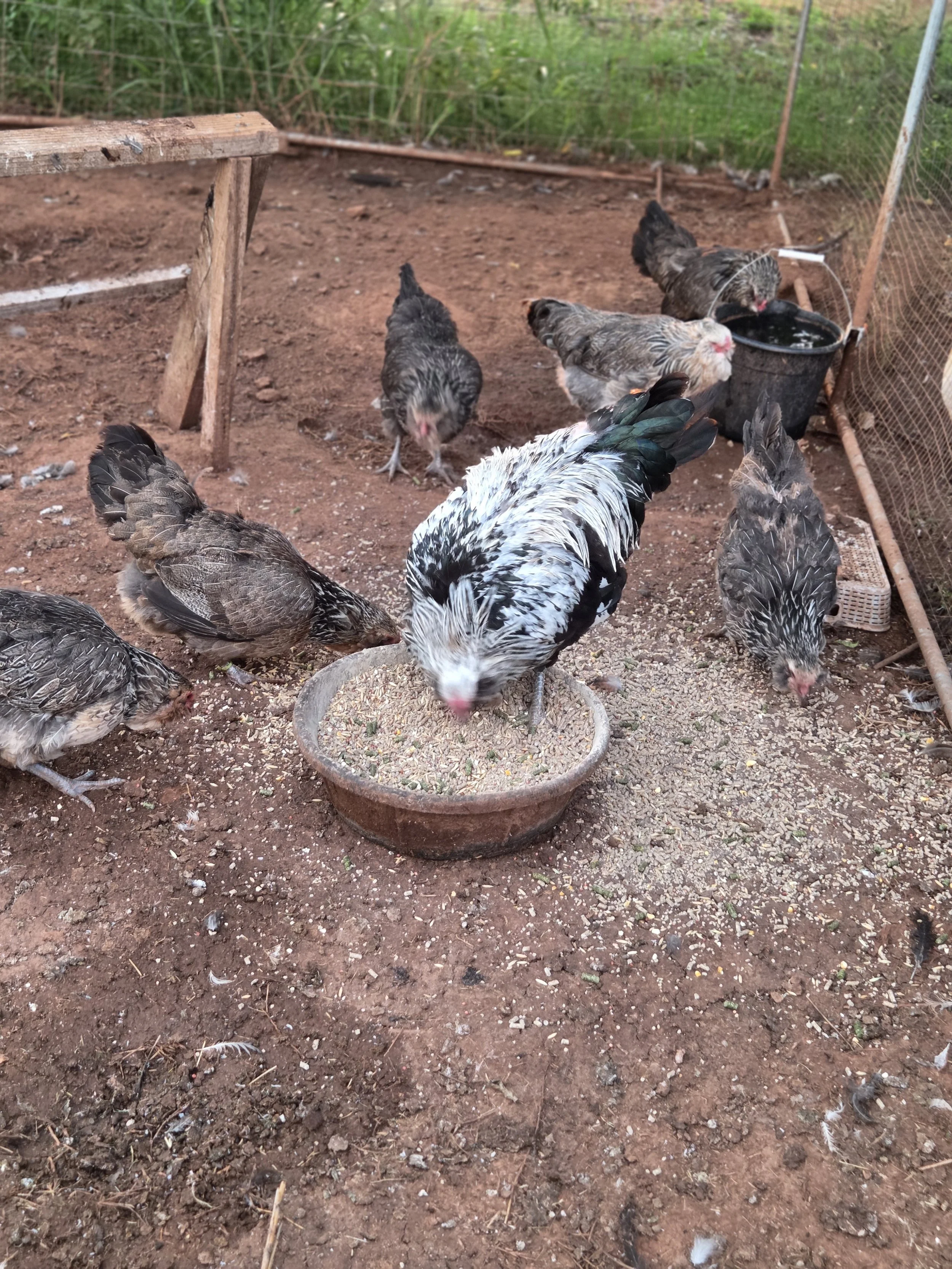
The Fall/Winter 2026 breeding group
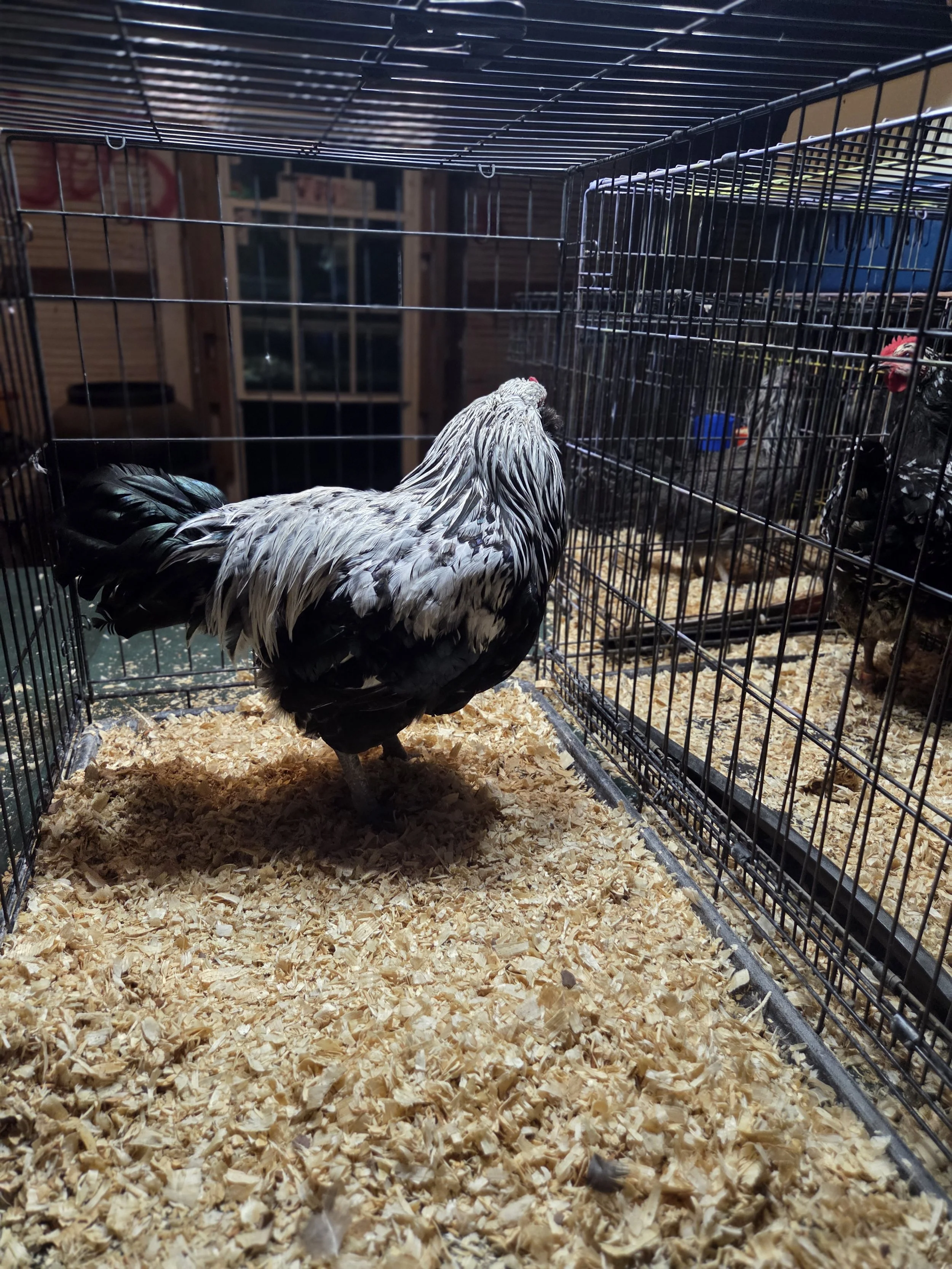
A Cock bird in conditioning for my first show
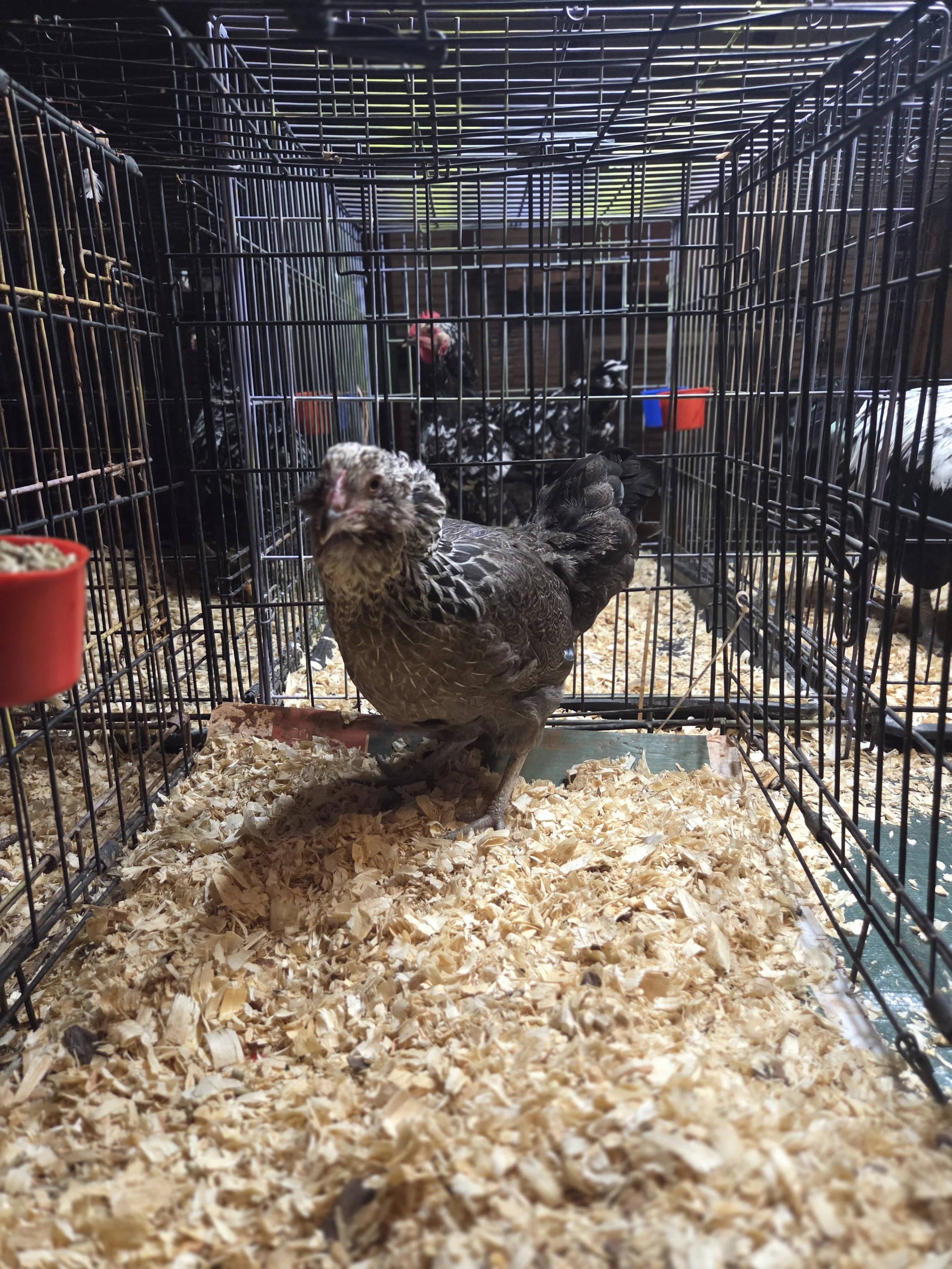
A pullet in conditioning for my first show