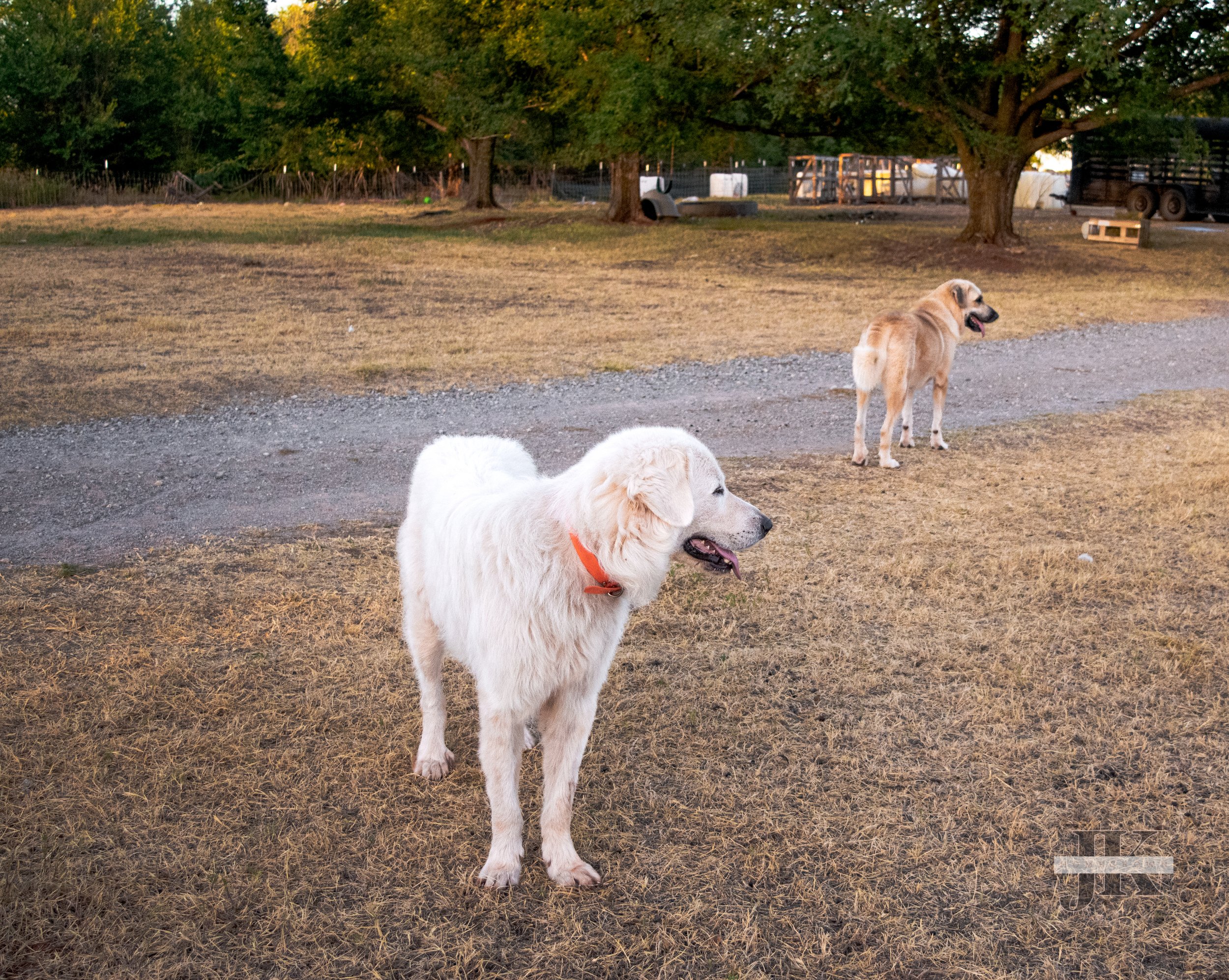
Livestock guardians raised for the responsibility of protecting livestock.
Our Guardians
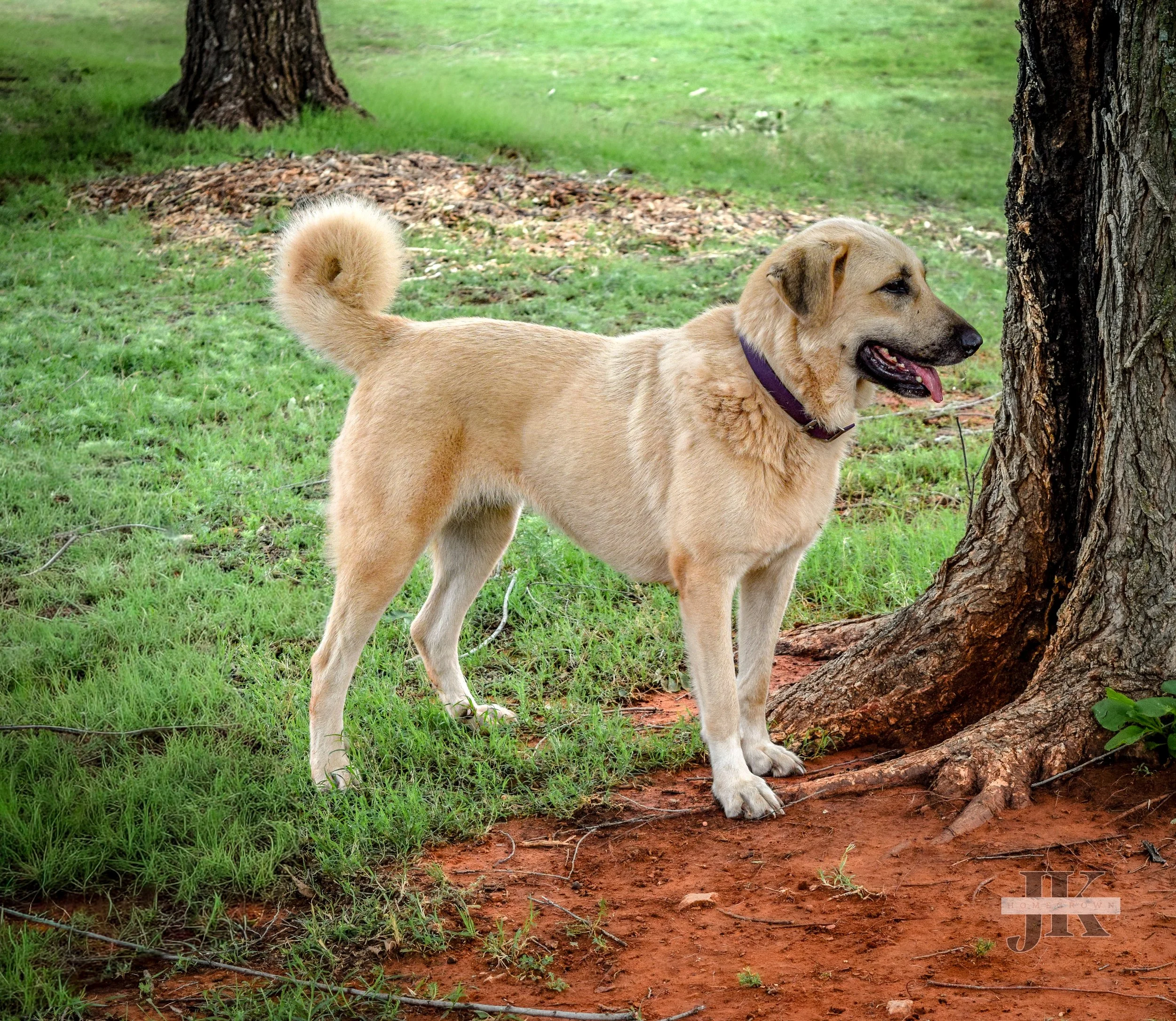
Meet Serena
Great Pyrenees/Anatolian Shepherd 54:46
March 15, 2024
Lead Guardian
Prefers working with sheep, but has grown to watching over the poultry as well
Friendly, Independent, likes to patrol the perimeter then settle and alert from her chosen resting spot, and moves fast when she needs to
Serena is super adaptable. She went from never having been on a leash, in a car, or out of the small yard she was in, to a confident dog that while a little nervous at the vet, loads up and walks politely on leash for vet care.
Serena is still working on some house manners for times when I need to bring the dogs inside. She likes to go in and out the door whenever it opens.
Serena is my first Guardian Dog. She has taught me a lot and fulfilled a much needed role on the farm. Since adding Serena, I have not had any losses to coyotes.
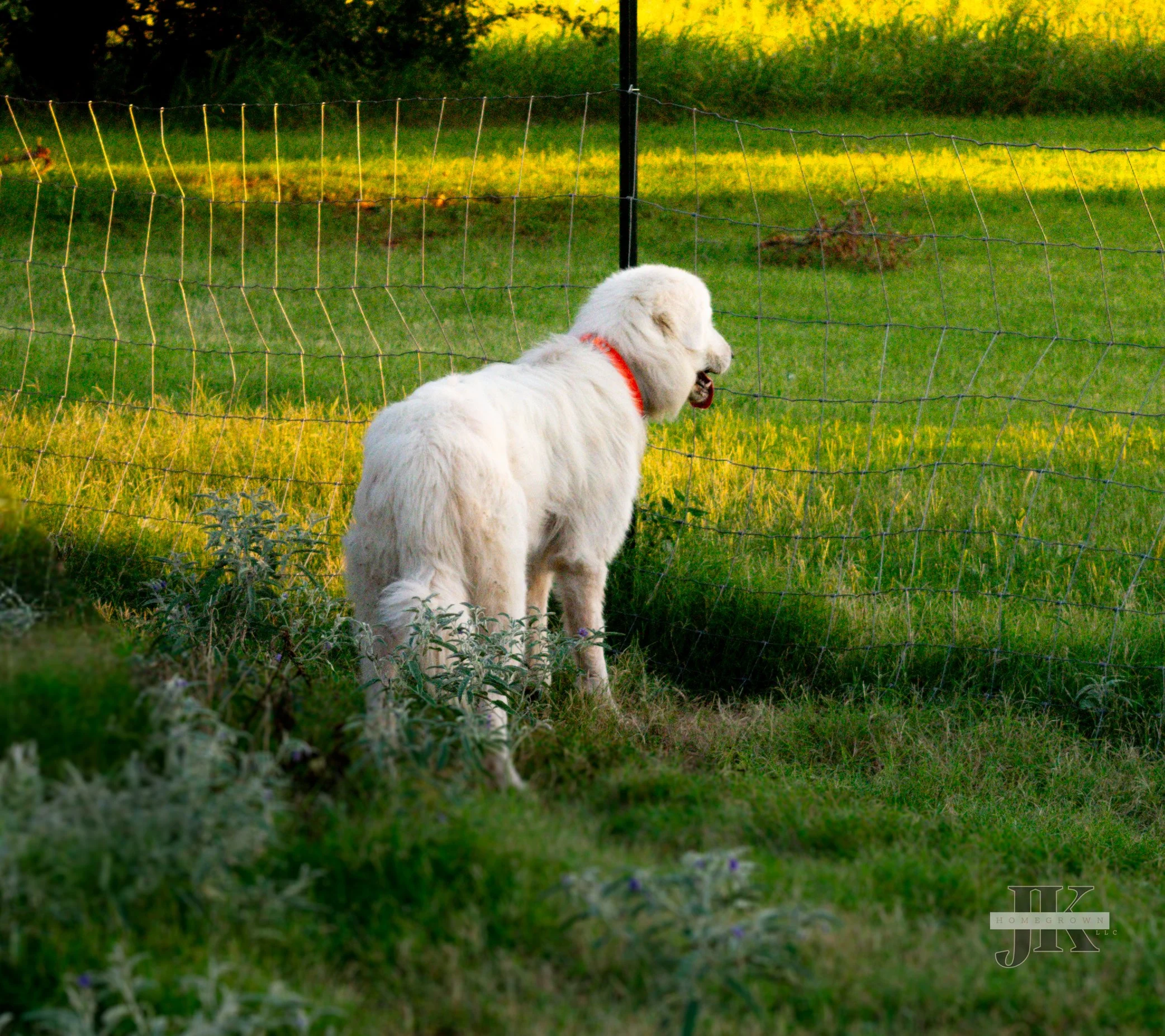
Meet Milo
Great Pyrenees/Maremma
December 29, 2024
Poultry Guardian
Prefers working with poultry, but is learning to work around the sheep and is still building confidence with them
Friendly, playful, likes to settle in the bird yard and watch from there. When Serena gives a certain alert, Milo books it to back her up.
Milo has a poultry-comes-first mindset when he’s working. He backs up Serena when needed, but returns to settle in the bird yard and is the farm’s main poultry guardian.
Milo is still young and developing as a guardian. He is learning how to broaden his confidence beyond poultry, especially when working around the sheep, while continuing to mature into the independent decision-making that comes with an adult livestock guardian.
Milo is my second Guardian Dog. He continues to show me where my fence is lacking since he is more prone to roam when pursuing a threat. Since Milo came to the farm and started working, I have not lost any poultry to our smaller predators.
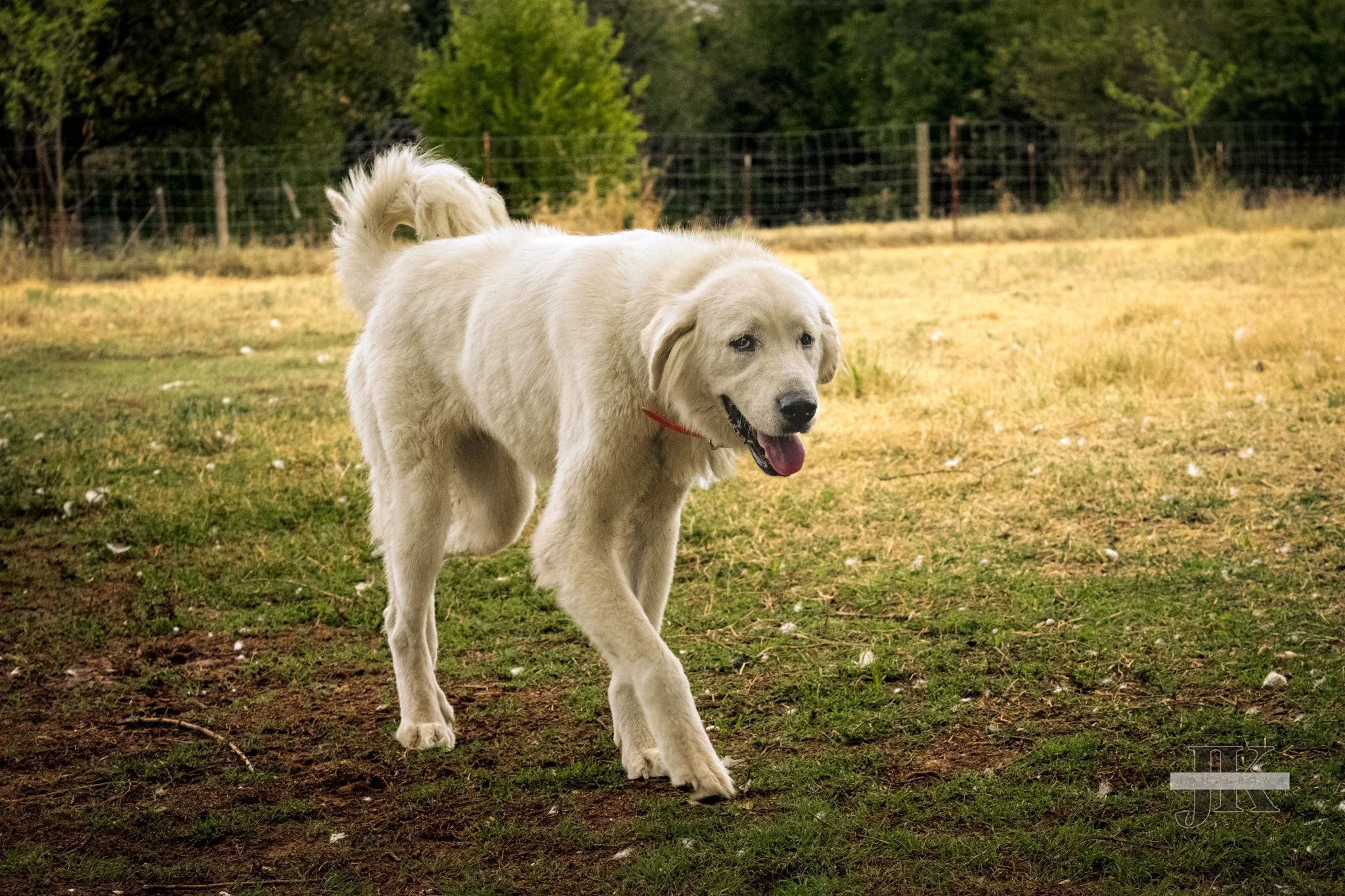
Meet Nova
Great Pyrenees
December 22, 2024
Foster & Train
Nova is gaining experience around the livestock and poultry at JK Homegrown while her behavior and working instincts are evaluated.
Nova is still very much a puppy mentally. She is playful, curious, and enthusiastic, but has considerably more growing up to do before she can be expected to work with the maturity of an adult livestock guardian. Her current stage is less about independent work and more about learning how to exist appropriately within the farm, respond to boundaries, and make better choices around livestock.
Nova is young, adaptable, and still at an age where she has plenty of opportunity to develop into a solid working dog. Her time here allows her to learn alongside experienced guardians while being exposed to the routines and expectations of an active mixed-livestock farm.
Maturity is the biggest piece for Nova right now. Livestock guardians develop slowly, and she still has substantial learning ahead of her before she will be ready for fully independent work. She is continuing to develop impulse control, appropriate livestock behavior, farm boundaries, confidence, and the judgment required of a dependable adult guardian.
Nova is not a permanent member of the JK Homegrown guardian team. She is here as a long-term foster-and-train dog, giving her time to mature, gain livestock experience, and become better prepared for an eventual working placement. While she is here, she is very much part of the farm, and part of the team that is helping her figure out what kind of guardian she can become.
Our Guardian Philosophy
Why We Use a Team
Livestock guardians are more effective when they can work as a team. One dog may notice something first, another may respond faster, and another may stay closer to the livestock while the others investigate. Their different strengths help create broader coverage across the farm.
Working in a team also means the dogs do not have to handle every situation alone. They can back each other up, share the workload, and respond together when something feels wrong. That teamwork has become an important part of how I use livestock guardians at JK Homegrown.
Raising Livestock Guardians
Livestock guardians are not born knowing every rule of the farm. They mature slowly, learn through experience, and need supervision, boundaries, and correction while they develop. Young dogs are going to make mistakes, but those mistakes should be part of a progression toward safe, reliable, independent work.
Raising a guardian means balancing freedom to learn with enough management to keep both the dog and livestock safe. As they mature, I gradually expect more independent decision-making and less intervention from me. Livestock guardian breeds were developed to think for themselves, and the goal is not a dog that waits for constant direction, it is a dog that understands its job and can make good decisions when I am not standing there.
Why We Use LGDs
Predator pressure is part of raising livestock, and I would rather prevent losses than react to them afterward. Livestock guardian dogs provide an active layer of protection that fencing, secure housing, and good husbandry cannot provide on their own. Their presence, scent, barking, patrols, and response to threats all help discourage predators from viewing the farm as an easy place to hunt.
They also allow the livestock more freedom to live like livestock. Sheep can graze, poultry can spend time outside, and I do not have to rely entirely on locking animals into predator-proof housing to keep them safe. LGDs are not the whole predator-management plan, but they are a major part of what makes the system work.
Not every dog at JK Homegrown is a livestock guardian, but they still have their own place in farm life.
Other Dogs on the Farm
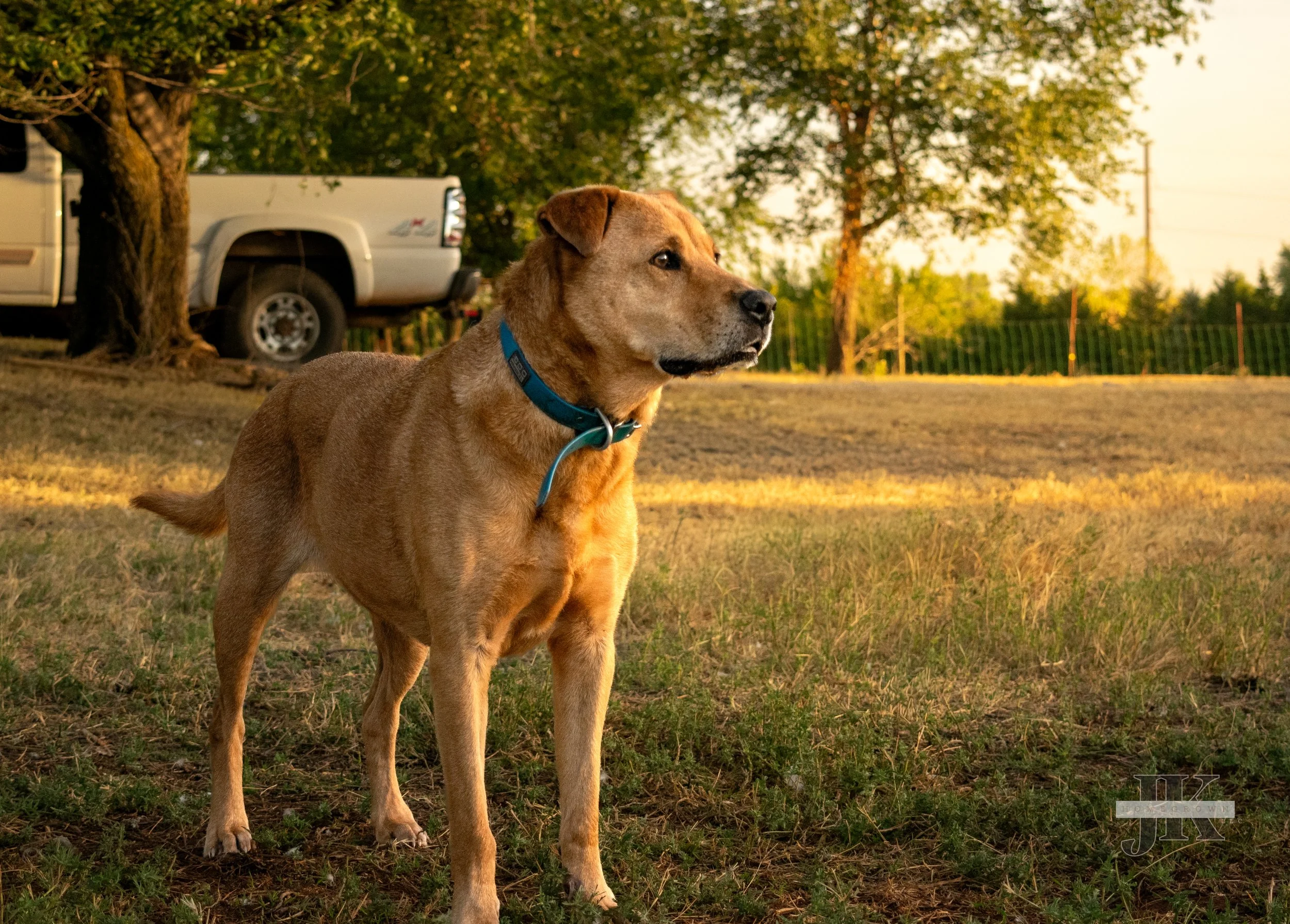
Buddy
Goodest Boy & Occasional BackupBuddy is not a livestock guardian dog and was never raised or trained to be one. He is a senior pet who occasionally chooses to pull a shift with the working dogs, especially when one of the guardians needs to stay inside. His natural alerting tends to focus more on people, unfamiliar dogs, and activity around the property than livestock predators.
He has also required training and supervision around poultry, especially young birds. His occasional work on the farm should not be taken as an example that a non-LGD breed or pet dog can simply be turned loose with livestock.
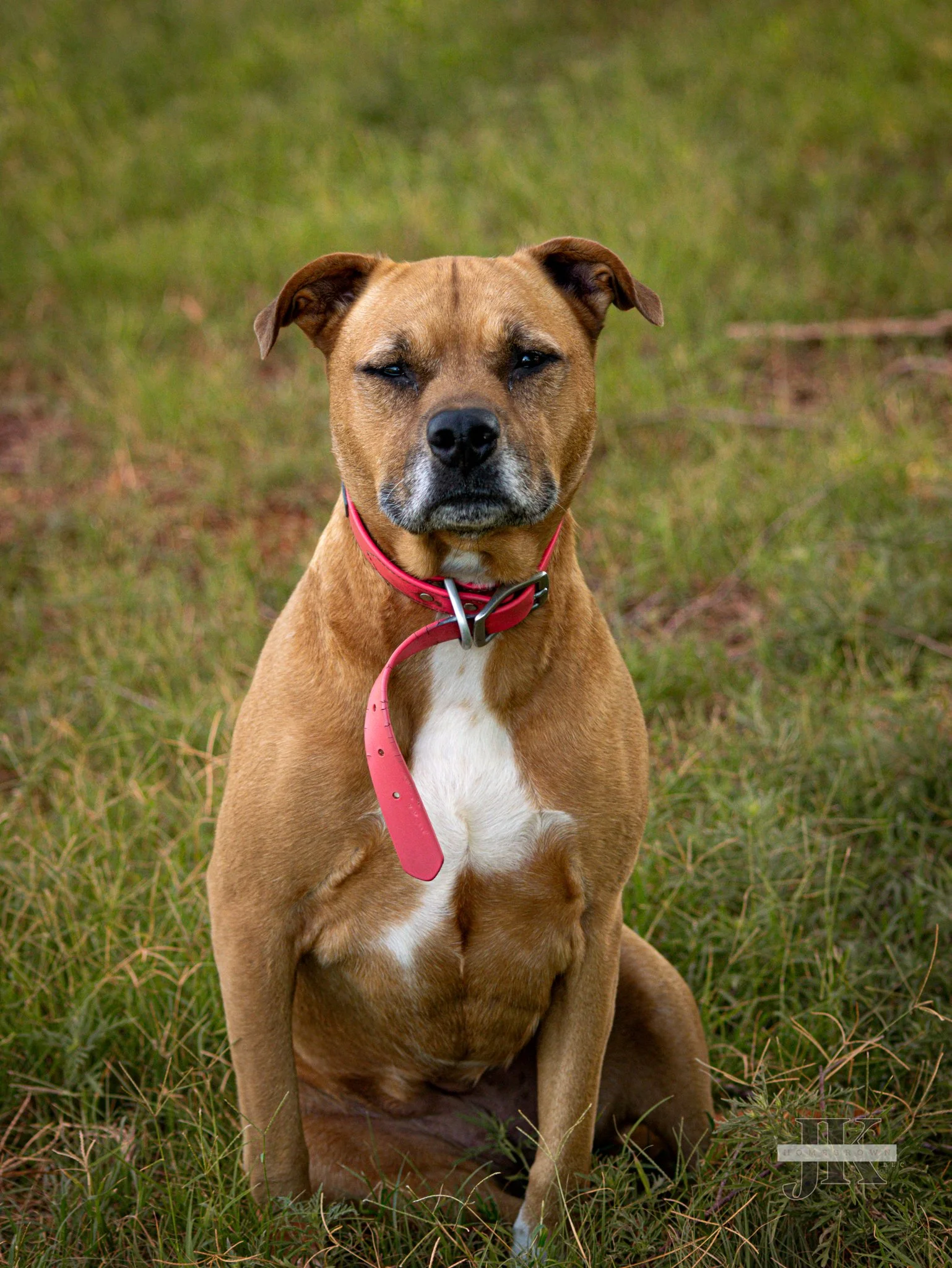
Ginny
Ginny is not a livestock guardian dog and never will become one. She is a pet, and unlike Serena, Milo, or even Buddy on one of his occasional shifts, she does not have a working role with the poultry or livestock.
Most of Ginny’s contribution to JK Homegrown involves companionship, supervising things from the sidelines, and letting herself back inside to the air conditioning.
She is part of farm life, but her interactions with livestock are managed based on who she is as an individual dog. That has taken a lot of training and still requires regular reinforcement.
Professional House Dog